
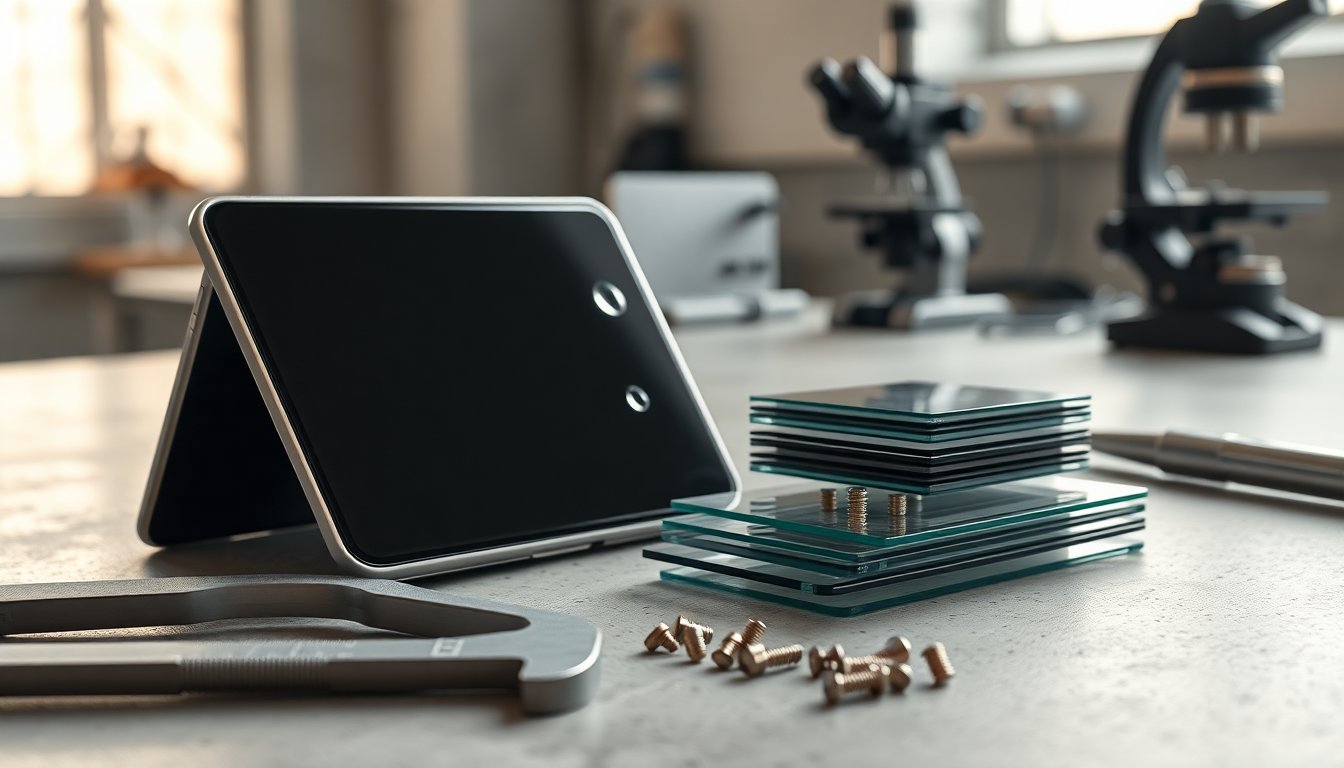
Foldable phones once felt like fragile experiments, but recent generations show real engineering progress. Advances in durability, hinge design, and display protection mean these devices are no longer niche gadgets for careful users only. Reviewers and engineers who struggled with early units now point to improved ingress protection and tougher materials as key reasons to reconsider a foldable as a daily driver.
In this guide you’ll find a practical breakdown of what changed, who benefits from each form factor, and the standout models to consider. We highlight the technical upgrades—like improved IP ratings, titanium hinges, and reinforced glass—while also explaining real-world trade-offs such as price and repair costs. Expect clear comparisons of the Pixel 10 Pro Fold, Motorola Razr Ultra, budget Razr, and leading Samsung alternatives.
Why foldables are worth revisiting
Manufacturers addressed the weakest points of earlier foldables by improving seals, reengineering hinge mechanics, and layering display protection. Many current models carry an official IP rating, which offers meaningful resistance to splashes and, in some cases, dust. That is a major shift from the first wave of foldables that had no formal protection. Equally important are material choices: hinges now often use titanium for strength and corrosion resistance, and cover screens commonly employ Corning Gorilla Glass for better scratch and drop performance. These changes make foldables more robust in everyday scenarios like commuting or casual outdoor use.
Durability and components
Beyond external ratings, manufacturers redesigned internal parts to last longer. New hinges use refined gearsets or gearless designs that reduce wear, and flexible displays now include multiple films and improved coatings to resist damage. For example, some flagship models are rated to endure tens of thousands of folds—equivalent to many years of typical use—thanks to these mechanical and material upgrades. Still, most phones remain sensitive to fine dust, so a case and mindful handling are prudent when you’re hiking or at the beach.
Which style fits your needs
Foldables come in two main silhouettes: the wide-opening phablet and the compact clamshell. The phablet opens horizontally to create a larger canvas that’s useful for multitasking, watching video, or reading—think of it as a pocketable tablet. The clamshell flips open vertically, offering a full-size screen in a smaller folded footprint and a handy external screen for quick tasks and camera previews. If you value one-handed pocketability and quick selfies, a clamshell may be preferable. If you want multitasking and a bigger workspace, the phablet shape will likely suit you better.
Software and longevity
Hardware alone doesn’t make a foldable useful: software optimization for dual displays is essential. Look for models that run apps smoothly across both screens, support split-screen workflows, and receive long-term updates. Google and Samsung currently offer extended update windows on many of their flagships, which is important for security and feature improvements. Motorola’s devices tend to have shorter official update timelines, so weigh update policy if you plan to keep a phone for several years.
Top picks and what they deliver
The Google Pixel 10 Pro Fold stands out as a durable phablet with a strong feature set: an IP68 rating, a reinforced main display with dual films, an 8-inch interior panel, a 6.4-inch cover screen, and a large 5,015 mAh battery. It runs on Google’s Tensor G5 processor and benefits from Google’s AI features and seven years of updates. Motorola’s Razr Ultra (2026) is the leading clamshell choice, offering a bright outer display, a 7-inch interior panel, a robust titanium hinge, a 4,700 mAh battery, and a strong camera setup; it uses a Snapdragon 8 Elite and emphasizes style and compactness.
For budget-conscious buyers, the Motorola Razr (2026) delivers many of the clamshell conveniences at a lower price, with respectable battery life and a useful cover screen. Samsung’s Galaxy Z Fold7 and Z Flip7 remain excellent alternatives: the Fold7 focuses on top-tier imaging and a thin profile (at the cost of slightly shorter battery life), while the Flip7 delivers an improved cover screen experience for clamshell fans. Finally, keep an eye on upcoming devices: Motorola’s Razr Fold—announced at CES 2026 and detailed further at Mobile World Congress—promises an 8.1-inch interior, a Snapdragon 8 Gen 5 chipset, a large battery, and stylus support, hinting at continued momentum in the category.
When choosing, balance the convenience of a larger or more pocketable screen against higher prices and potential repair costs. Consider extended warranties or manufacturer insurance, and prioritize models with strong materials, reliable hinges, and solid software support. With the recent advances in durability and practical software features, many buyers will find a foldable that genuinely enhances daily use.


