
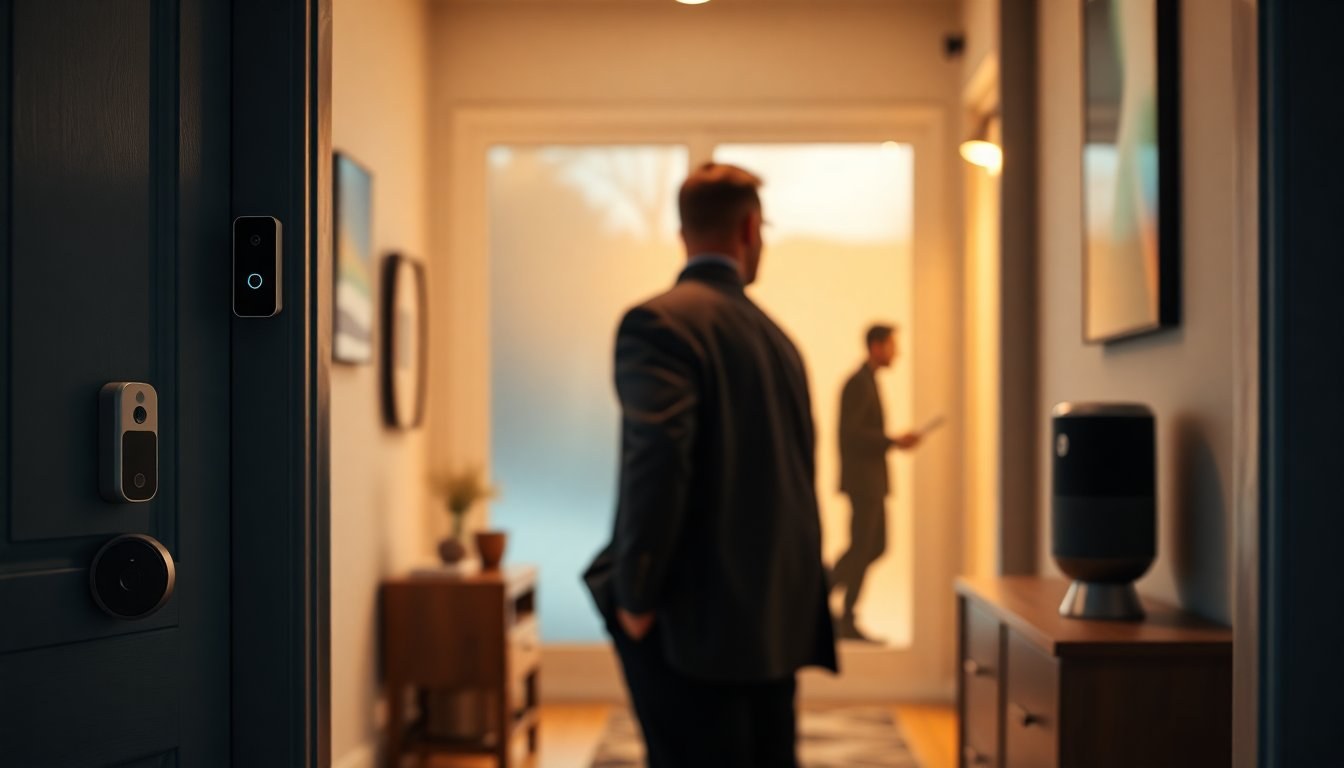
The smart home landscape has shifted as Nest moves to become more closely aligned with Google‘s voice platform. After a period of separation in public perception, Nest’s recent product introductions make it clear the two brands are operating as a unified ecosystem. The refreshed lineup includes a video doorbell, a keyless smart lock and a compact temperature sensor, each designed to cooperate with Google Assistant and be controllable from a single smart home network. This approach is intended to reduce the friction associated with mixing devices from many manufacturers and to offer a more predictable user experience.
New devices: what they are and how they work
The centerpiece for front‑door monitoring is the Nest Hello, a video doorbell that streams live video, sends alerts and records interactions at the threshold. It competes directly with other internet-connected doorbells on the market and brings features like two‑way audio, motion detection and programmable quick replies so homeowners can respond when they can’t answer live. Complementing the camera is the Nest Yale, a keyless smart lock that uses a numeric code rather than a physical key and connects over Wi‑Fi so owners can grant and revoke access from an app. Both units are positioned to be part of a cohesive system rather than stand‑alone gadgets.
Temperature sensor for fairer heating
To address uneven warmth within houses, Nest is also offering a compact temperature sensor that pairs with its thermostats. This little device is intended for rooms that tend to run cooler or hotter than the central thermostat location; by placing the sensor where comfort matters most, the thermostat can adjust heating or cooling to prioritize that spot. The sensor is aimed at solving a common problem: a single thermostat can’t always reflect the comfort needs of multiple rooms. As an addition to the Nest ecosystem, it gives homeowners a way to refine climate control without rewiring or swapping out the main thermostat.
Integration: Google Assistant and the benefits of a unified ecosystem
Where these devices shine is in their integration with Google Assistant and compatibility with Google Home speakers. Users can ask the assistant to show the front door camera feed, lock or unlock the door, or check the temperature reported by a remote sensor—actions that are executed across the same ecosystem. This deeper level of coupling is presented as a solution to the headaches that arise when people assemble a smart home from disparate brands, each with its own app, notifications and quirks. The promise is smoother setup, centralized control and fewer surprises in day‑to‑day use.
How this compares to other options
In the broader market, there are several rivals offering similar hardware, including companies whose products are now part of other big ecosystems. One well‑known competitor in the doorbell space was recently acquired by a major online retailer for a sizable sum, which has only intensified competition. Nest’s strategy leans on the value of a tightly integrated platform: if consumers already use Google Assistant or Google Home, adding Nest hardware is pitched as a way to avoid cross‑vendor compatibility problems. For buyers the choice becomes one of ecosystem convenience versus selecting best‑in‑class components from multiple vendors.
Practical considerations: setup, access and privacy
Installation and management are intended to be straightforward: the doorbell requires a standard doorbell circuit and an internet connection so it can stream video, while the lock installs in place of an existing deadbolt and uses codes managed through an app. The thermostat sensor pairs wirelessly with the existing HVAC controller. From a privacy and security perspective, the company emphasizes encrypted communications and account controls, and the ability for homeowners to manage who receives alerts or has remote access. These features are particularly important for devices like a video doorbell and a smart lock, where access and surveillance intersect.
Why this matters going forward
By folding Nest more visibly into Google’s voice ecosystem, the company hopes to strengthen its position against rivals and make the idea of a fully voice‑enabled home more compelling. The integrated approach aims to lower the technical bar for building a cohesive smart home and to give consumers confidence that connected devices will work together reliably. Whether customers prioritize tight integration, price, or specific device features will shape adoption, but the arrival of matched hardware optimized for Google Assistant marks a distinct moment in the evolution of mainstream smart home products.


