
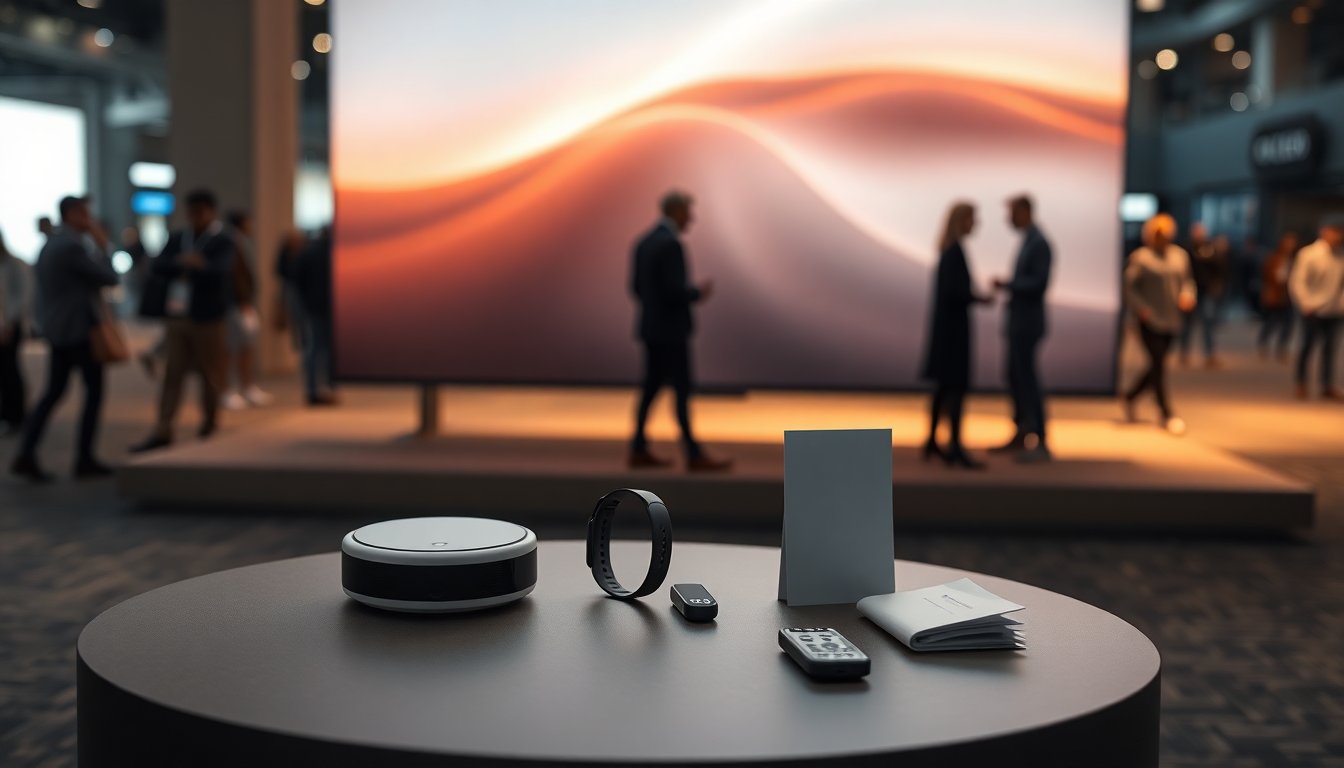
CES 2026 returned to Las Vegas with an expansive lineup of product debuts that spanned massive televisions, experimental gadgets, and practical upgrades to everyday devices. The show felt like a snapshot of where consumer technology is heading: brighter and larger displays, smarter cleaning robots, and growing interest in health monitoring. For many attendees the event was both a technology festival and a pragmatic industry briefing, showing which items are ready for mainstream homes and which remain exploratory prototypes.
The exhibition footprint covered press stages and packed halls, with major manufacturers and smaller startups sharing the floor. Keynotes and briefings from companies such as Samsung, Intel, Nvidia and others introduced new silicon and form factors, while dozens of booths demonstrated incremental but meaningful upgrades in wearables, audio and home automation. The atmosphere underscored two truths: manufacturers are converging on a few big ideas, and artificial intelligence is increasingly embedded across categories in subtle ways.
Show highlights and standout launches
Televisions dominated attention, but not in a single direction. Brands pushed both peak brightness and novel panel approaches: there were high-lumen Mini LED entries and explorations of Micro RGB pixel solutions. Manufacturers also showcased improvements to OLED brightness and coatings designed to reduce reflections. Foldable and multi-fold screens appeared in phones and prototypes, including creaseless designs that drew comparison to rumored devices from other ecosystems. Outside displays, there were tangible advances in mobility and cleaning: compact robot vacuums with reduced height and new navigation systems sought to solve real household problems.
Notable devices and curiosities
Several individual products captured attention for practicality or audacity: a sub-8cm tall robot vacuum that slips into tight spaces, a legged vacuum prototype designed to climb stairs, and a rechargeable charger that can rapidly top up power stations. On the mobile side, some phones added emergency satellite connectivity to lower-cost models, while makers of e-ink phones pushed improved performance and stylus support. Wearables and earbuds included experiments in real-time AI translation and even early-stage brainwave monitoring embedded into earbuds, marking a clear trend toward hybrid utility devices.
Emerging technical themes
Under the surface of product launches, several themes recurred. Display innovation led with enhanced HDR pipelines such as Dolby Vision 2 and next-gen Mini LED arrays offering higher sustained brightness. Companies also emphasized anti-glare coating and spatial-aware lighting tied to content, attempting to make screens feel less intrusive in living spaces. At the same time, robotics moved from single-function automation to platform thinking: vacuums now include vision, LiDAR and mapping stacks, while startups previewed humanoid and assistive robots intended for domestic work, suggesting a push toward more capable home assistants.
AI, health and the smart home
Health technology and ambient sensing were hard to miss. New products ranged from advanced smart scales that claim to detect dozens of biomarkers to mirrors and bathroom devices that analyze facial blood flow or urine for wellness metrics. These systems lean on machine learning to turn physiological signals into actionable feedback. Simultaneously, lighting, locks and speakers are gaining contextual awareness—treating rooms like stages for sound and light—so the smart home increasingly blends convenience with personal health and privacy considerations.
What the show means going forward
CES 2026 painted a clear picture: manufacturers are refining the technologies introduced in prior years and starting to commercialize more ambitious concepts. Expect to see the brightest OLEDs, more advanced HDR formats, and broader deployment of satellite emergency features in phones. Robotic cleaning and domestic assistance will continue to adopt more sophisticated sensing and navigation, while health-focused devices push non-invasive biomarker detection toward consumer-ready forms. Taken together, these developments suggest an industry moving from gimmicks to features that solve day-to-day problems.
Ultimately, the event served as an industry roadmap: innovations on display at CES 2026 indicate which devices will land in living rooms, pockets and garages over the coming year. Whether your interest is in cinematic screens, quieter everyday gadgets, or AI-enhanced health tools, the show highlighted a consistent aim—make technology more useful and less obtrusive in daily life.


