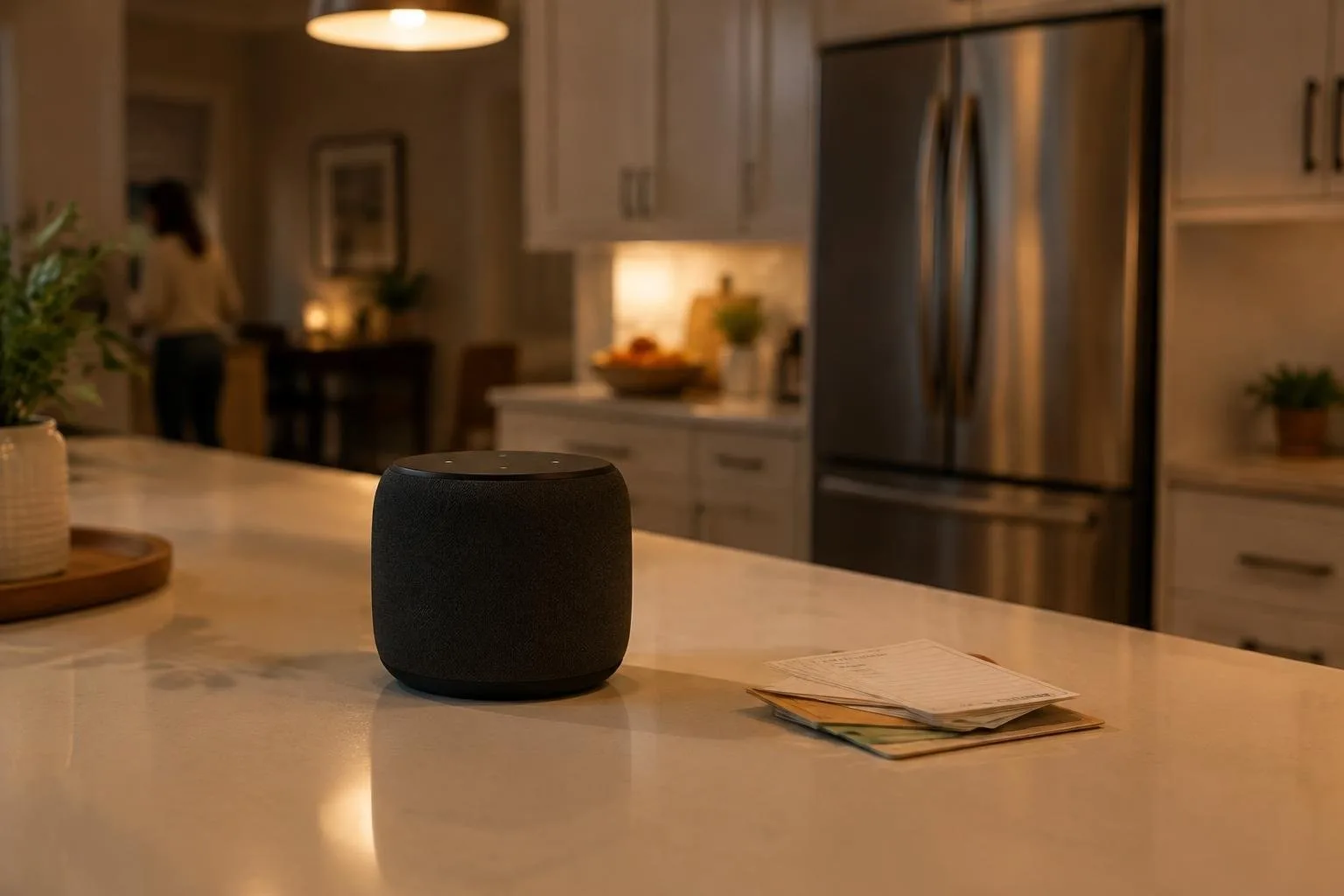
Amazon expanded Alexa for Shopping in the United States in May and has continued rolling out capabilities to let customers create, rename, merge or delete grocery lists and gift registries, manage deliveries, and set automated price alerts via voice. Ultimo aggiornamento: 2 novembre 2026.
The update matters because it shifts the assistant from simple product lookups to a conversational, operational tool that can act on behalf of shoppers, altering how consumers interact with online marketplaces. As AI agents proliferate, the enhancements aim to increase user engagement and per-order spend inside Amazon’s ecosystem.
Expanded list and registry management
Since its debut in May, Alexa for Shopping added multi-command list manipulation. Users in the United States can tell Alexa to “create a new shopping list” or “show me what’s left on my wedding registry,” and perform edits such as “add two boxes of espresso” or “move the set of plates to the birthday registry.” The assistant now supports renaming, merging and deleting lists, and it can shuffle items between registries with a single spoken command.
These features extended voice control to tasks previously completed through account settings or web interfaces, enabling shoppers to manage both recurring household purchases and event-related registries without opening the app. The system also accepts spoken requests to adjust delivery instructions and update recurring shipment schedules in real time.
Automated buying, recurring deliveries and billing help
Amazon introduced a price-alert automation that allows users to set a target price; the assistant will automatically purchase an item once it falls below that threshold. The capability leverages Amazon’s existing price-tracking infrastructure so Alexa can act as a hands-free shopper that executes purchases when conditions are met.
Beyond automated buys, Alexa for Shopping now manages recurring deliveries with voice commands such as “pause my weekly coffee order” or “change the delivery day for my pet food.” The assistant can also answer billing questions about unexplained charges or pending refunds, bringing account-level customer service into a conversational flow.
Engagement metrics and competitive landscape
Amazon reported that more than 400 million customers engaged with Alexa for Shopping over the past year, and that “customer interactions” jumped 570 % year over year. U.S. shoppers who used the assistant tended to spend about 50 % more per order than non-voice shoppers, indicating the feature’s potential to increase average order value.
During a quarterly earnings call, CEO Andy Jassy defended Amazon’s approach to third-party AI agents and referenced the company’s decision in September to block Meta’s Muse assistant from accessing the storefront. Jassy argued that “the experience is still not great, nor more convenient than coming to a retailer directly,” positioning Amazon’s tightly integrated voice features as a competitive advantage.
Muse itself attracted rapid consumer interest after its early September introduction, reaching top spots in app charts and securing more than 10 million users in the United States and Canada. Meta reported that the average purchase facilitated by Muse exceeded $200, and the assistant’s ability to act autonomously on calendar and email data exemplifies a machine-to-machine shopping model that could bypass traditional storefront browsing.
Implications for retailers and supply chains
The rise of voice agents that can manage lists, set price triggers and execute orders pushes brands to optimize product feeds not just for human browsers but for algorithmic decision-makers. As AI agents become central to purchase flow, merchant visibility may shift from marketplace search rankings to how well product data integrates with assistants’ decision logic.
At the same time, manufacturing and logistics trends are relevant. Suppliers increasingly adopt AI and automation to support faster fulfillment and greener production; these shifts affect inventory freshness and the reliability of recurring-delivery services. Retailers and brands that integrate with voice-driven purchasing stand to benefit when suppliers can meet automated re-order cadence and delivery preferences.
Industry analysts note that AI-driven shopping will alter advertising and platform economics, since autonomous assistants can select products without exposing users to the same ad inventory that fuels current marketplace revenue models. Amazon’s feature additions aim to retain control over the user experience and the transactional data that supports its advertising and logistics businesses.
The next developments to watch include further expansion of voice-first billing and returns handling, broader international availability, and how third-party agents like Muse evolve their autonomous shopping features. For consumers, the immediate takeaway is the growing ability to manage lists, registries and recurring deliveries purely by voice and to set automated purchases that execute at preset price points.