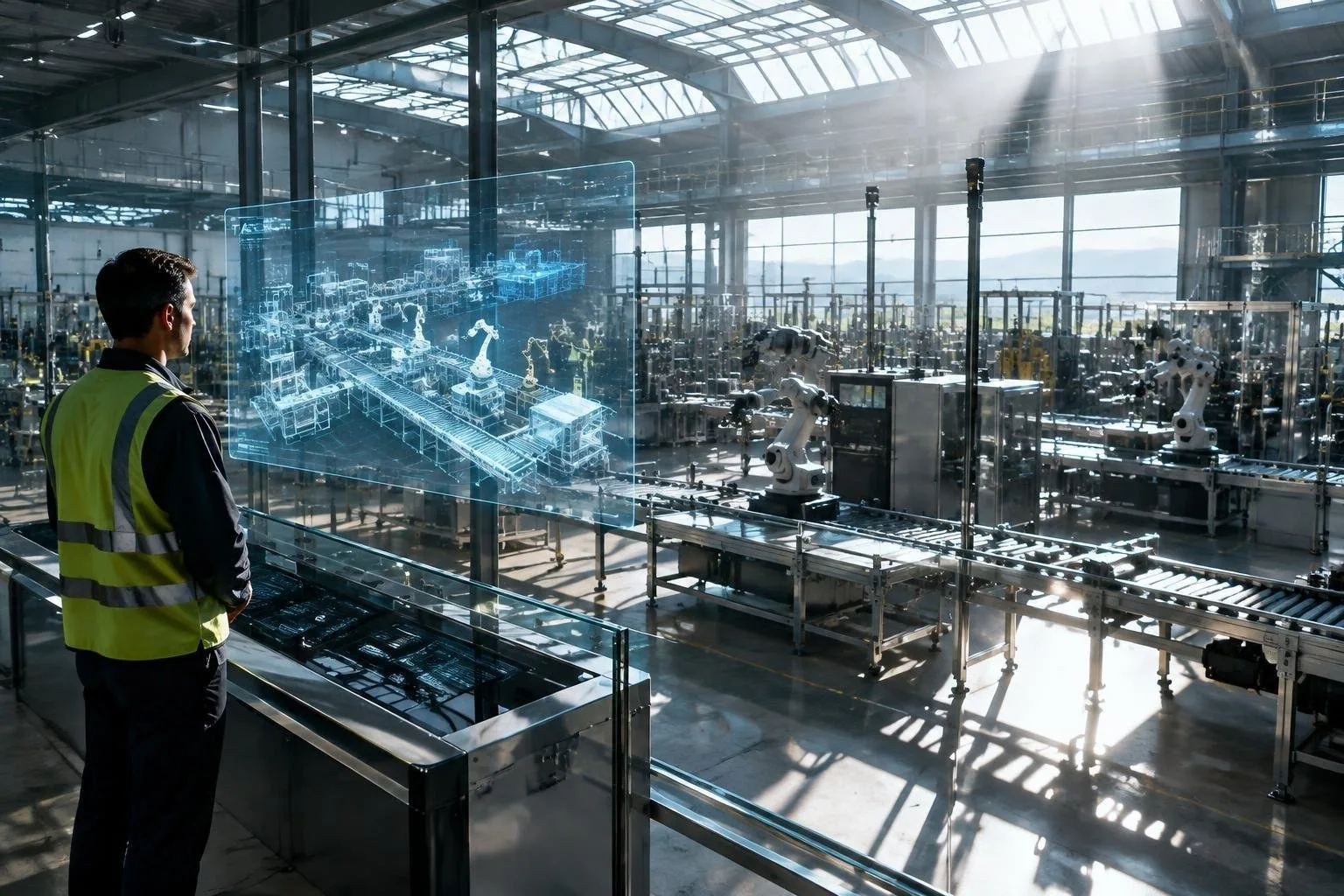
As the world moves towards greater automation, the concept of an autonomous factory is becoming increasingly important. But what does it take to build such a factory? The answer lies in a deep tech stack that includes sensors, fieldbuses, edge inference, digital twins, and cloud orchestration.
Reference Architecture
A reference architecture for an autonomous factory would typically include a range of components, from sensors and fieldbuses to edge inference and digital twins. The goal is to create a system that can operate independently, making decisions in real-time based on data from the factory floor.
Sensors and Fieldbuses
The first step in building an autonomous factory is to install a network of sensors that can collect data on everything from temperature and humidity to machine performance and production levels. This data is then transmitted to a central hub via fieldbuses, which are essentially specialized communication networks designed for industrial automation.
Edge Inference and Digital Twins
Once the data has been collected, it needs to be analyzed and acted upon. This is where edge inference comes in – a process that involves using machine learning algorithms to analyze data in real-time, making decisions and taking actions without the need for human intervention. Digital twins are also a key component, allowing factory owners to create virtual replicas of their facilities and test scenarios in a simulated environment.
Model Lifecycle and MLOps
Another important aspect of autonomous factory architecture is the model lifecycle, which refers to the process of developing, testing, and deploying machine learning models. This is often referred to as MLOps, and involves a range of tools and techniques for managing the entire model lifecycle, from data preparation to deployment and monitoring.
Safety and Redundancy
Safety is also a critical consideration in autonomous factory design. This includes not only the safety of human workers but also the integrity of the factory itself, including the machines and equipment. Redundancy is also important, with backup systems and fail-safes in place to prevent downtime and ensure continuous operation.
Vendor-Neutral Integration Practices
Finally, it’s essential to ensure that all components of the autonomous factory tech stack are integrated in a vendor-neutral way, allowing for seamless communication and data exchange between different systems and devices. This requires a range of standards and protocols, including those for data communication, device management, and security.
By following these principles and incorporating the latest deep tech innovations, it’s possible to build an autonomous factory that is not only highly efficient but also safe, reliable, and adaptable to changing conditions.