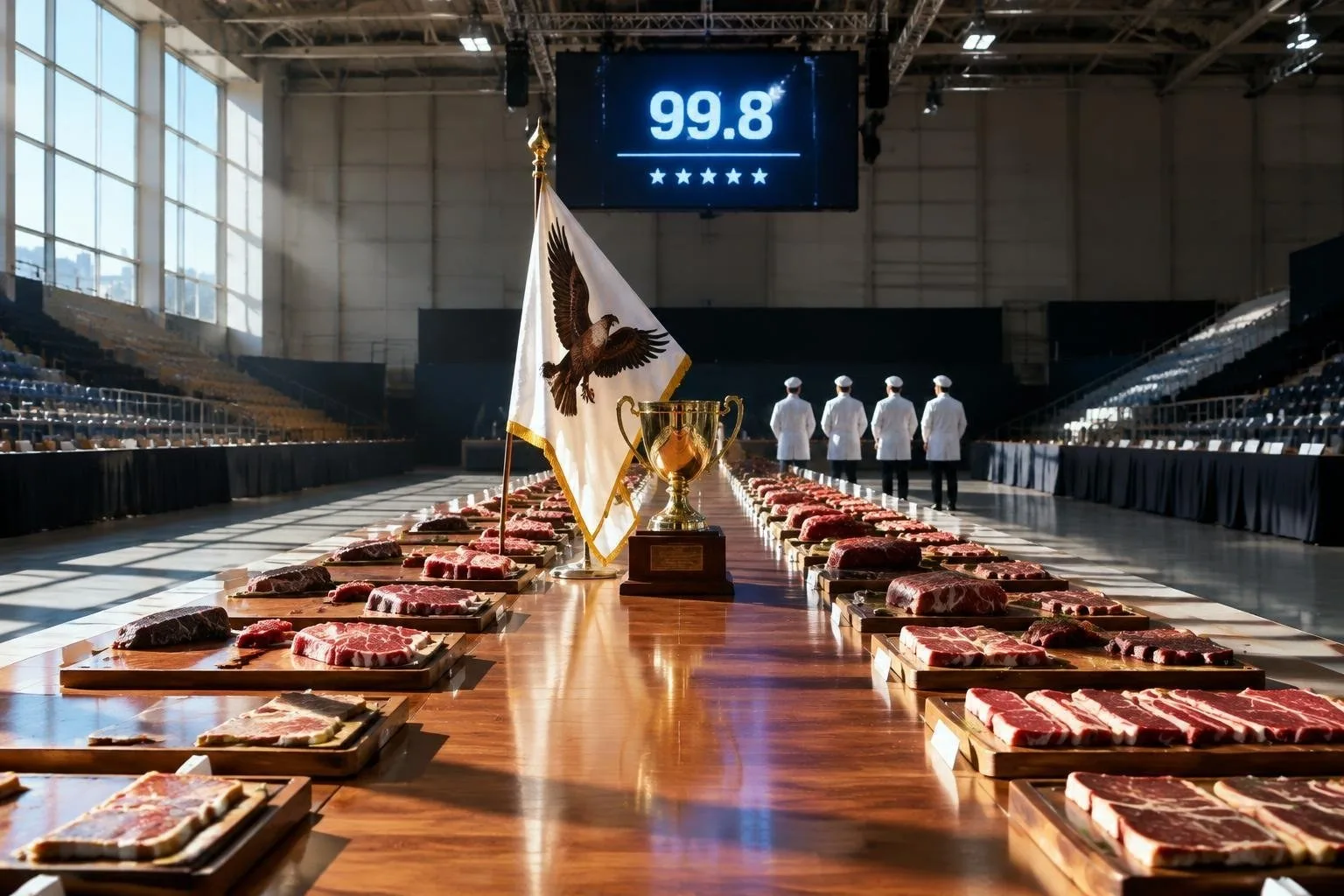
In a display of unparalleled precision and academic rigor, Texas Tech University’s Meat Judging Team secured its 17th national championship. The victory occurred on Sunday, November 15, during the 2026 International Intercollegiate Meat Judging Contest held in Dakota City, Nebraska. This triumph is not merely another trophy added to the cabinet; it represents a historic peak in the program’s long-standing tradition of excellence.
The team achieved a staggering score of 4,296 points, which officials confirmed as the highest total ever recorded in the 100-year history of collegiate meat judging competitions. Their dominance was further highlighted by a 62-point lead over the nearest rival, marking the largest margin of victory seen in recent decades. This performance underscores the rigorous training and deep technical knowledge possessed by the student competitors.
Unprecedented Individual and Team Accolades
Beyond the collective success, individual members of the squad delivered standout performances. All four students on the primary marking team ranked within the top ten individual competitors nationwide. Consequently, each member earned a place on the prestigious All-American team, an honor that recognizes exceptional achievement in both academic study and practical judging skills.
Clint Krehbiel, Dean of the Davis College of Agricultural Sciences & Natural Resources, expressed profound pride in the accomplishment. He noted that balancing demanding coursework, active campus involvement, and early morning practice sessions requires extraordinary discipline. According to Krehbiel, this victory reflects the team’s unwavering commitment and perseverance, validating their intense preparation throughout the season.
The Rigors of Collegiate Meat Science
The competition, hosted by the American Meat Science Association (AMSA) at a Tyson Foods facility, gathered approximately 100 students from 15 different universities. It serves as the definitive national benchmark for collegiate meat judging. Participants are tested on their comprehensive understanding of meat science, carcass evaluation techniques, and strict industry standards.
Judges must evaluate beef, pork, and lamb carcasses alongside various wholesale cuts. They assess factors such as meat quality, yield potential, and adherence to specifications. Crucially, competitors also submit written justifications for their decisions, demonstrating their ability to defend evaluations with logical and scientific reasoning. This blend of sensory assessment and analytical writing distinguishes the sport from typical athletic contests.
Diverse Academic Backgrounds Drive Success
The winning roster consists of 17 students, illustrating the interdisciplinary nature of modern agricultural programs. While the majority pursue degrees in animal science, the team also includes scholars specializing in agricultural communications and agricultural and applied economics. This diversity ensures that participants possess a well-rounded perspective, combining biological knowledge with economic viability and clear communication skills.
Texas Tech’s program has maintained a legacy of national prominence since capturing its first championship in 1989. The current victory caps a highly successful year characterized by multiple major competition wins and numerous individual honors. The consistency of their performance suggests a deeply embedded culture of excellence within the department, attracting talented students who excel in specialized technical fields.
The event highlights how niche academic competitions can achieve mainstream visibility through exceptional performance. By breaking century-old records, the Texas Tech team has reaffirmed its status as a powerhouse in agricultural education. Their achievement demonstrates that dedication to technical mastery in specific industries yields significant recognition and competitive advantage.