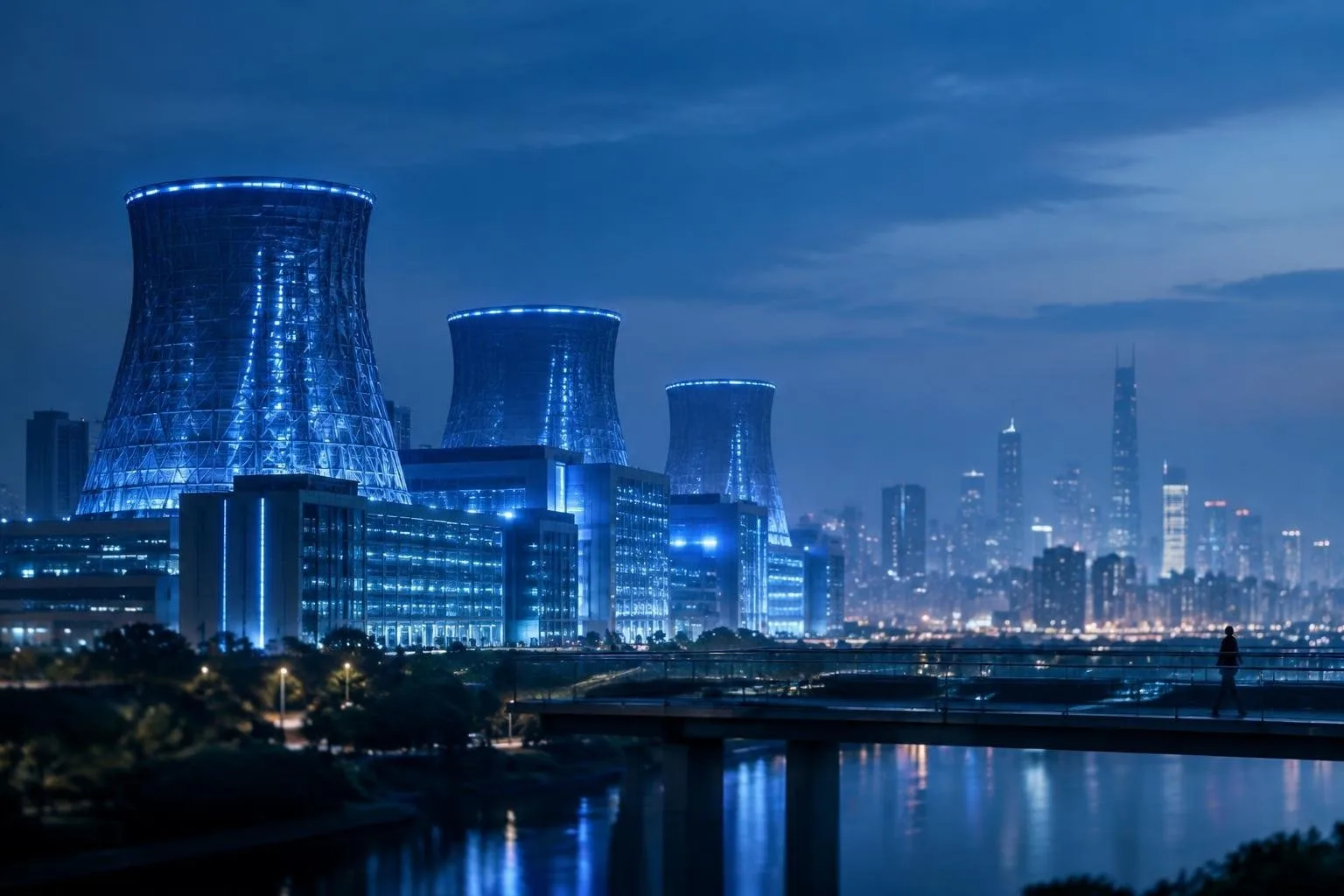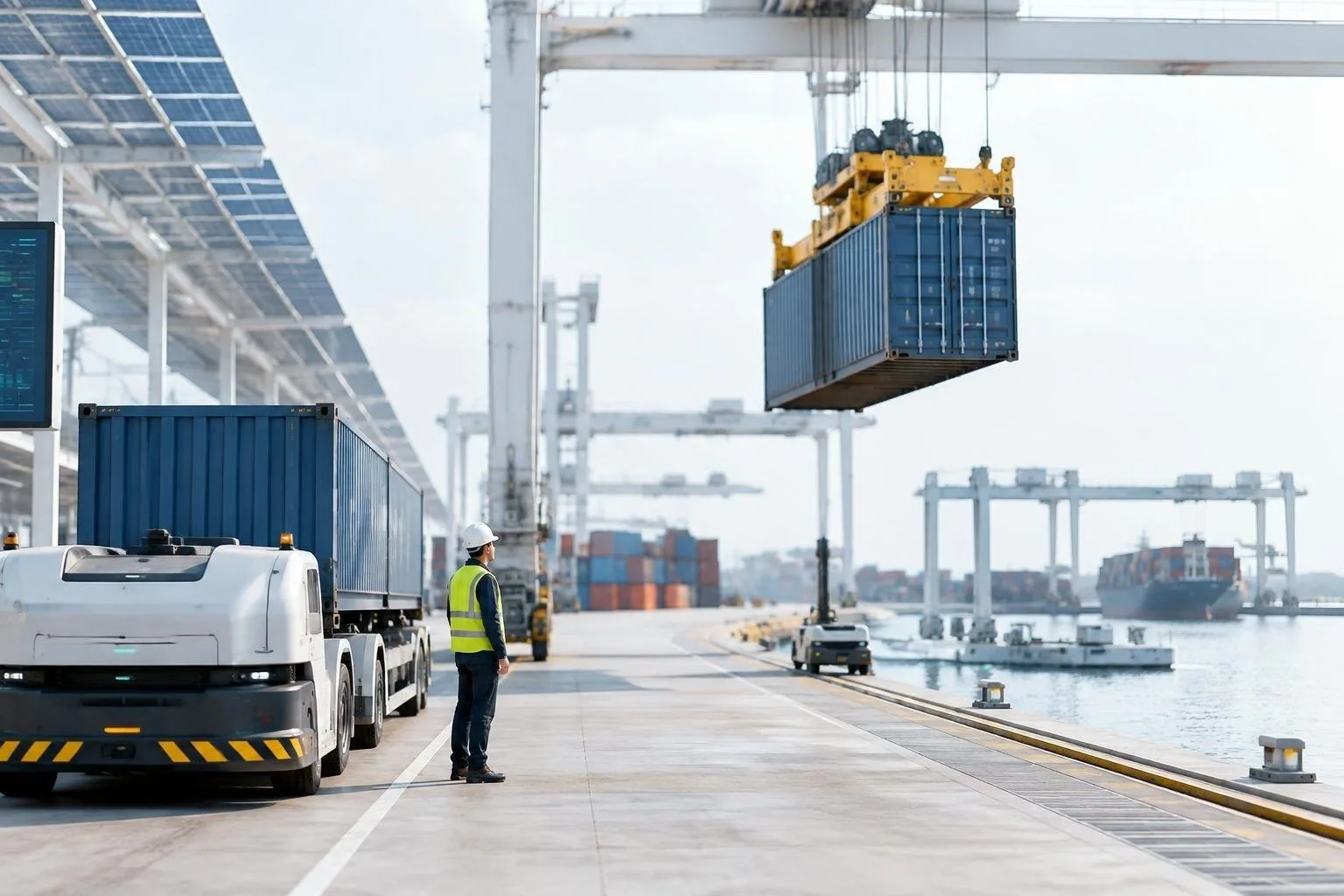
As leaders converge on Shenzhen for the Asia-Pacific Economic Cooperation summit, Beijing is using the occasion to showcase a vision of shipping that runs on automation and artificial intelligence. The city’s Mawan Terminal, already equipped with driverless trucks, remote-controlled cranes and AI-guided scheduling, is presented as a model for the future of a sector that moves more than 80% of global goods by volume.
China’s ambition extends well beyond a single dock. The Ministry of Transport reports that the country operates 60 fully automated terminals – the most anywhere on the planet – and aims to raise that figure to 90 by 2030. The flagship New Qianwan Container Terminal in Qingdao, billed as the world’s first completely driverless port, can shift 61 containers per crane each hour, roughly double the capacity of conventional facilities.
China’s race to automate global shipping hubs
The rapid rollout is made possible by a policy environment that lacks the organized labor pushback seen in the United States, where unions have successfully slowed automation in major ports. A 2024 Government Accountability Office review highlighted that the ten largest U.S. ports remain less automated than many of their overseas rivals, a gap that China is exploiting.
Domestic manufacturers such as Westwell, which builds autonomous trucks, and Huawei, a leader in telecom equipment, are packaging these solutions for export. Westwell’s driverless trucks already operate at Felixstowe, Britain’s busiest container terminal, while Huawei markets integrated smart-port platforms to developing nations under the Belt and Road framework. According to AidData, China has funneled roughly $4.8 billion into port equipment at 69 facilities across 47 countries since 2000, on top of $15.5 billion spent acquiring or building foreign ports.
AI infrastructure sales drive a $1 trillion trade surplus
Parallel to the maritime push, China’s export basket has been buoyed by a worldwide scramble to install AI infrastructure. In October, customs data recorded a 35.2% year-on-year rise in export value, pushing the nation’s trade surplus past the $1 trillion mark for the second straight year – a milestone reached a month earlier than in 2025. The surge is largely attributed to high-tech products such as AI chips, robotics, and advanced networking gear.
While the surplus highlights the potency of China’s tech sector, it also inflames friction with major partners. The European Union has already negotiated limits on Chinese hybrid-vehicle shipments, a measure that could provoke pre-emptive export spikes. In the United States, the recent extension of a trade truce hinges on reciprocal tariff reductions for U.S. farm goods, but analysts warn that additional barriers remain likely in 2027 as Chinese firms continue expanding overseas.
Domestic consumption, however, stays muted. A lingering property market slump erodes household wealth, prompting manufacturers – especially automakers – to chase foreign markets. The same AI-driven export engine that inflates the surplus also makes the Chinese economy increasingly vulnerable to a downturn in global demand.
Security fallout: from port data to Nvidia chips
China’s technological ascent has triggered alarm in Washington over potential espionage vectors. The collapse of LOGINK, a China-backed logistics data platform, exposed fears that such systems could grant Beijing real-time insight into sensitive cargo flows. The United States urged allies to disengage, highlighting the strategic risk of a digital bill of lading ecosystem dominated by Chinese operators.
Separately, Nvidia’s chief executive Jensen Huang disclosed an affair with a woman alleged by U.S. intelligence to be a Chinese spy. Although the company has launched an independent investigation and insists no trade secrets were compromised, the episode underscores the broader concern that China may seek to acquire cutting-edge AI chips and related know-how through covert means.
These incidents illustrate the dual nature of China’s high-tech push: on one hand, it fuels economic growth and positions Beijing as a leader in next-generation logistics; on the other, it raises the specter of strategic dependence and potential misuse of technology for economic coercion or intelligence gathering.