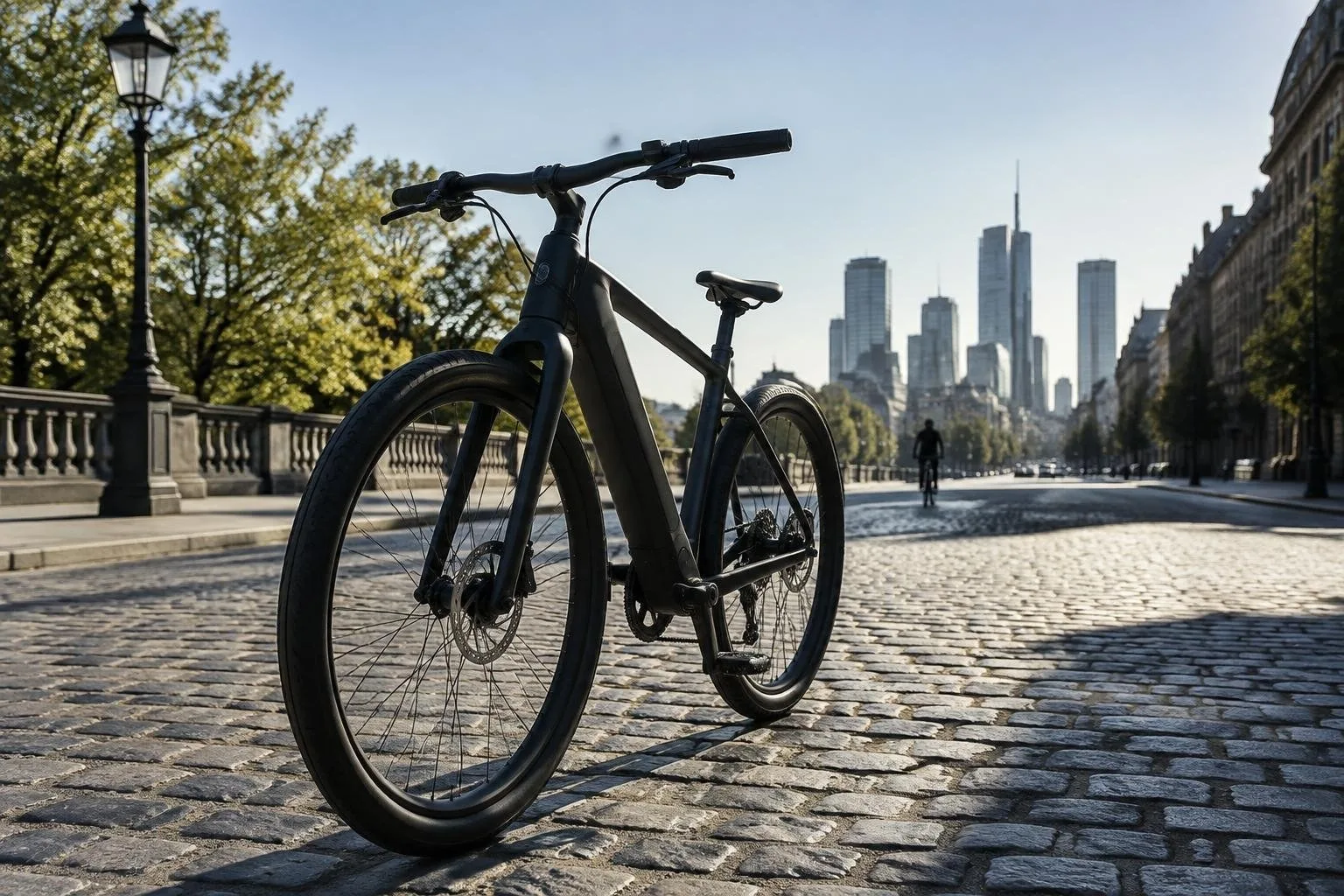
The ONYX RCR 80V arrives at a crossroads between traditional electric bicycles and full-blown electric motorcycles. Conceived as a “bridge” vehicle, it carries genuine bicycle pedals underneath a sleek, retro-styled frame, yet its motor can surge to a top speed of around 75 mph (120 km/h) when the speed limiter is removed. This hybrid identity raises questions about design intent, legal classification, and everyday usability.
Originally spotted by founder Tim Seward in 2017, the concept targeted riders who wanted a machine small enough to fit into an apartment elevator yet powerful enough to feel like a genuine motorbike. The result is a 150-pound two-wheeler that looks like a stripped-down cafe racer, complete with a sizable headlamp, mirrors, and motorcycle-grade suspension, but proudly displays a pair of crank-driven pedals at the bottom of its frame.
Design philosophy: why pedals matter
Visually, the RCR 80V borrows heavily from classic café racers, featuring a low-slung seat, angular fuel-tank-style fairing, and a chassis built around an 80 V battery pack. The most striking deviation from a conventional e-motorcycle is the inclusion of a full-size pedal drivetrain—crank arms, chain, and sprocket—that can be engaged for low-speed maneuvering or simply for the novelty of pedaling a bike that can later rocket past highway traffic.
According to company statements, the pedals are not intended to provide electric assistance; they serve as a legal bridge to meet certain e-bike regulations that require human-powered propulsion. In jurisdictions where an electric bicycle must have pedals, the RCR can be registered as such, provided the speed-limiting software is left intact. Removing the limiter upgrades the bike to a true 21 kW (roughly 21 000 W) electric motorcycle, but it also shifts the vehicle into a different regulatory category.
Powertrain, performance and specifications
The heart of the RCR 80V is an 80-volt, 45 Ah (3 600 Wh) lithium-ion battery that feeds an eight-kilowatt nominal motor. In unrestricted mode, the motor can deliver peaks near 21 kW, propelling the machine to the advertised 65-75 mph envelope depending on terrain and rider weight. Acceleration is brisk, with 0-30 mph figures rivaling many entry-level sport bikes.
Range figures are modest by commuter standards: manufacturers claim up to 70 km on a single charge when ridden conservatively, but real-world tests often hover between 35 km and 45 km, especially when tapping the high-performance mode. The battery packs are removable, allowing owners to charge the unit indoors or swap for a spare on longer trips. Charging from empty to 80 % takes roughly 2.5 hours on a standard 110 V outlet.
One of the more quirky aspects is the control interface. Instead of a traditional key, the bike uses a wireless fob: a quick double-press of the lightning-bolt button after unlocking awakens the system, accompanied by a nostalgic 1990s-style alarm chirp. Once alive, the rider can toggle between three speed-limit settings via a small touchscreen, which also displays navigation, calls, and music controls.
Riding experience, practicalities and legal landscape
On the road, the RCR feels surprisingly light for its performance class, thanks to a well-tuned suspension and a low centre of gravity created by the battery’s placement. The pedals are functional enough for slow-speed city crawling, but they add little to the riding dynamics at higher speeds; they are more a compliance feature than a genuine propulsion aid.
Storage is a notable advantage. The compact wheelbase and overall length allow the bike to be parked in tight urban spaces, and its weight makes lifting it into a stairwell or a small garage feasible for most riders. Assembly out of the box requires attaching the front wheel, pedals, and a few brackets—tasks that the original owner, the late Joe Salas, described as straightforward.
Legal classification varies by region. In U.S. states that define a Class 3 e-bike as having pedals and a maximum assisted speed of 28 mph, the RCR can qualify if the speed limiter remains active. Once the limiter is disabled, the vehicle is treated as a motorcycle, requiring registration, insurance, a helmet, and a valid motorcycle license. Prospective buyers must verify local regulations before deciding whether to keep the restriction or unlock full performance.
Overall, the ONYX RCR 80V delivers a unique blend of form and function. It satisfies riders seeking a machine that looks like a classic bike, offers genuine motorcycle-level power, and can slip through e-bike legal definitions when needed. The trade-offs are clear: limited range, a higher price point, and a learning curve around the quirky start-up sequence. For enthusiasts who relish the novelty of pedaling a 75-mph electric motorcycle, the RCR stands out as a compelling, if niche, option.