
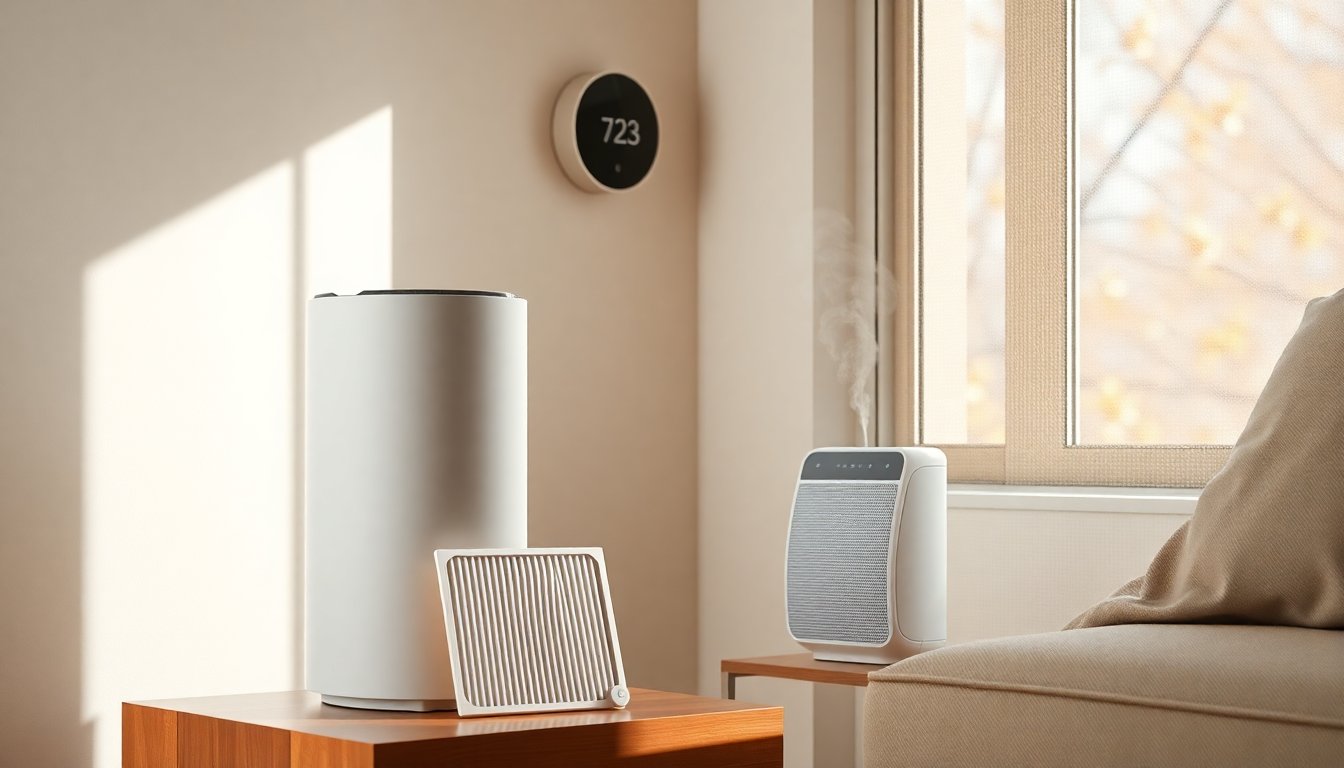
Spring and allergy season can make stepping outside feel risky for anyone sensitive to pollen. Over years of living with seasonal allergies I learned to treat my home as the frontline: the right combination of sensors, filters, and automation reduces exposure and eases symptoms. This approach relies on four pillars: a smart air purifier with a true HEPA filter, distributed air quality monitoring, a smart thermostat that manages ventilation, and a smart humidifier that keeps humidity in a safe range.
Automate air cleaning with smart purifiers
A core device in this setup is a smart air purifier that can respond when particle levels rise. Many modern units detect spikes in indoor particles and automatically ramp up fan speeds when they sense pollen, dust, or smoke. Look specifically for a model using a certified HEPA filter, because the 99.97% particle removal performance is the standard that actually removes fine allergens from the air. Smart purifiers can also display an indoor AQI reading and integrate with home platforms so they react without manual control.
Choosing the right purifier for your rooms
Two practical factors determine performance: the size of the room and the purifier’s cleaning speed. Smaller units are best in compact spaces and will take longer to clear a larger open plan area; conversely, larger purifiers finish cycles faster in living rooms and bedrooms. If you want a balanced recommendation that works well in many homes, consider the Levoit Vital 200S as a reliable option that pairs smart controls with a true HEPA filter. Always check the manufacturer’s coverage rating to match a device to the room you intend to protect.
Track indoor air and automate responses
Knowing when the air actually worsens is essential to avoid running devices constantly. A smart air quality monitor gives actionable data by measuring particles and reporting an indoor AQI—the air quality index used to gauge particle concentration. Many smart purifiers show a local AQI but adding a dedicated monitor allows you to watch multiple rooms, spot trends, and trigger automations. For example, repeated evening increases could indicate pollen brought in through doors or particles created while cooking; those patterns let you schedule the purifier and ventilation fans more precisely.
Devices and integration tips
Choose monitors that broadcast readings to your smart home hub so you can create rules like “if AQI rises above X, turn on purifier and kitchen fan.” The SwitchBot Air Quality Monitor is one such device that pairs easily with other smart home components. It’s useful to place monitors in sleeping areas and the main living space to capture where you and your family spend the most time, then use those readings to drive automated responses rather than guessing when to run equipment.
Manage humidity and ventilation for long-term relief
Humidity control is another often-overlooked tool to manage allergies. Aim to keep indoor relative humidity between 40% and 50%, because that range helps allergens settle out of the air without encouraging mold or dust mites. If humidity dips below 30%, mucous membranes can dry and irritate the nose and throat; if it rises above 60%, the risk of mold and dust mite growth climbs. A smart humidifier can run automatically when sensors report low humidity, maintaining comfort while reducing airborne allergen activity.
Thermostats and HVAC cooperation
A smart thermostat does more than set temperature: it can run your HVAC fan periodically to circulate filtered air, track historical data to find times of poor air quality, and remind you to replace HVAC and purifier filters. These features make the whole system more effective because clean, moving air and timely filter changes keep particle counts down. If you want a consumer-grade smart thermostat that supports these behaviors, the Google Nest Learning Thermostat (4th gen) is a widely supported option.
Bringing these elements together—automated purifiers with certified HEPA filters, reliable air quality monitoring, a coordinating smart thermostat, and a controlled smart humidifier—creates a robust defense against pollen inside the home. Start by prioritizing a true HEPA purifier sized for your main living area and add monitors to refine automation. With sensors and rules in place you’ll spend less time managing devices and more time breathing easier indoors.


