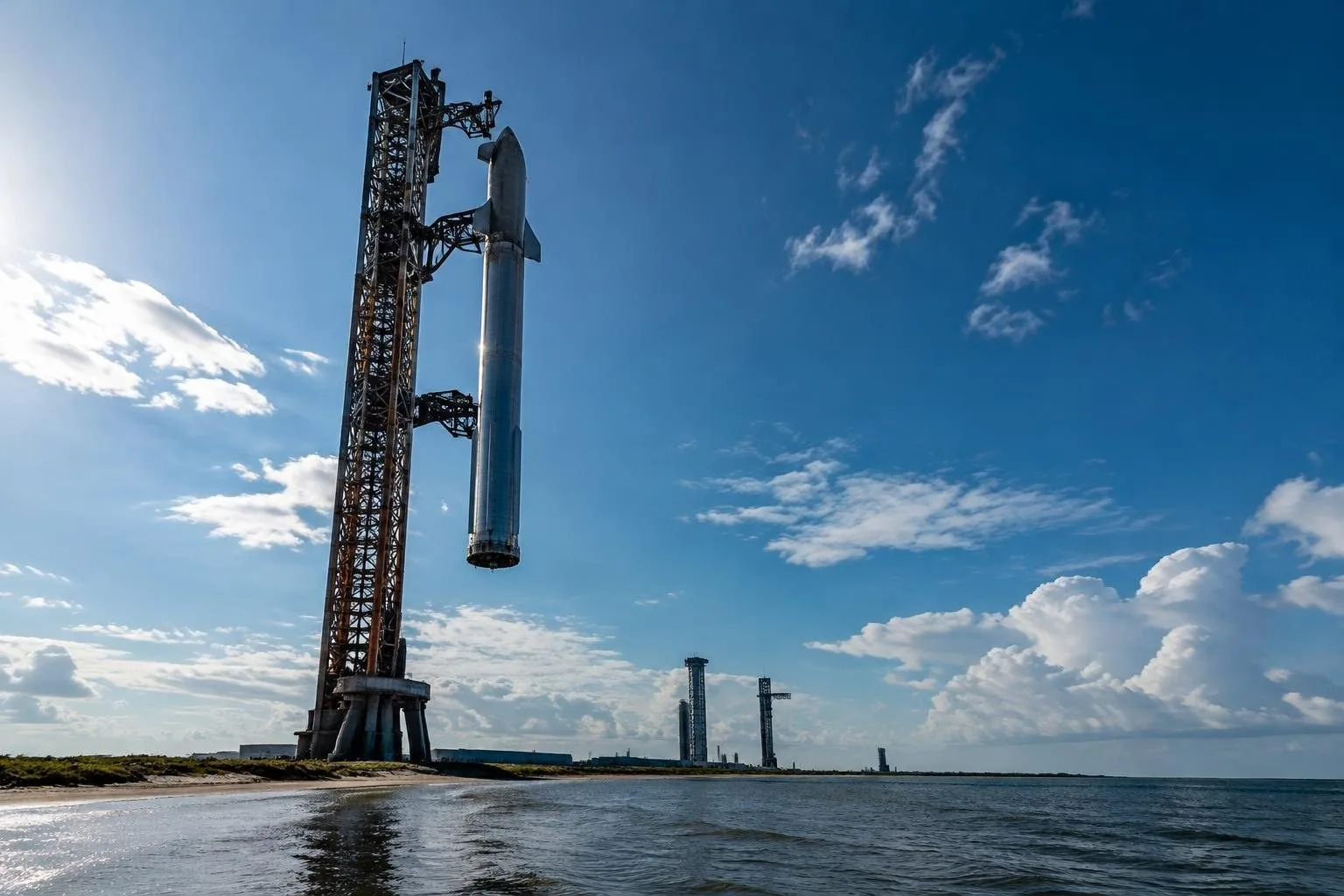
On Nov. 13, 2026, SpaceX launched the 41-story, 124-metre Starship from Pad 2 at Starbase in South Texas. The vehicle, powered by a cluster of 33 Raptor engines, lifted off as scheduled and placed the Ship upper stage into a 165-mile orbit, deploying 26 next-gen Starlink V3 satellites. Shortly after stage separation, the Super Heavy booster began its planned return, but an unexpected low fuel mass alarm triggered an automated abort, diverting the booster toward a contingency splash-down zone in the Gulf of Mexico. There, the flight termination system (FTS) activated, causing an explosion that scattered debris across the water.
Booster abort and explosion: what went wrong
SpaceX’s own spokesperson, Dan Huot, initially suggested a guidance anomaly, but later clarified that the GNC (guidance, navigation, and control) system functioned as designed. It detected that the booster was off-track for the planned “chopsticks” capture and ordered a self-destruct sequence. Kate Tice added that early telemetry indicated the boost-back burn stopped early because the fuel gauge reached a low-fuel threshold. Out of the original 33 Raptor engines, 32 remained operational for the boost-back phase after one engine dropped out post-separation, and 13 were meant to fire during the landing burn before the abort was executed.
Mechazilla’s historic mid-air capture
While the booster met a watery end, the Ship upper stage continued its orbital loop, completing 14 revolutions around Earth. At approximately 4:20 p.m. ET on Nov. 14, the vehicle re-entered and performed a controlled flip, aligning itself beneath the tower’s massive metal arms: nicknamed “Mechazilla.” For the first time in the program’s history, the launch-tower catch succeeded on the Starship vehicle itself, not just on earlier Super Heavy test flights. Terrence O’Brien, a veteran tech journalist, described the maneuver as “a graceful insertion between the waiting arms.” Elon Musk, addressing investors during the three-quarter earnings call, warned that early flights carry risk but said, “success is not guaranteed on these first flights, but I’d say it’s more likely than not that this succeeds next flight.”
Implications for reusability and future missions
The partial success demonstrates that the Mechazilla capture system can handle the full-scale Starship, a critical step toward the rocket’s promised rapid turnaround and low-cost launches. NASA has already selected Starship as one of two commercial landers for Artemis missions targeting a 2028 lunar landing, and SpaceX plans to use the vehicle for a 100,000-satellite Starlink V3 constellation and an orbiting AI data centre called Starmind. The next milestone will be a safe, controlled landing of the Ship stage back at Starbase, a maneuver that will be watched closely by both commercial and governmental partners.