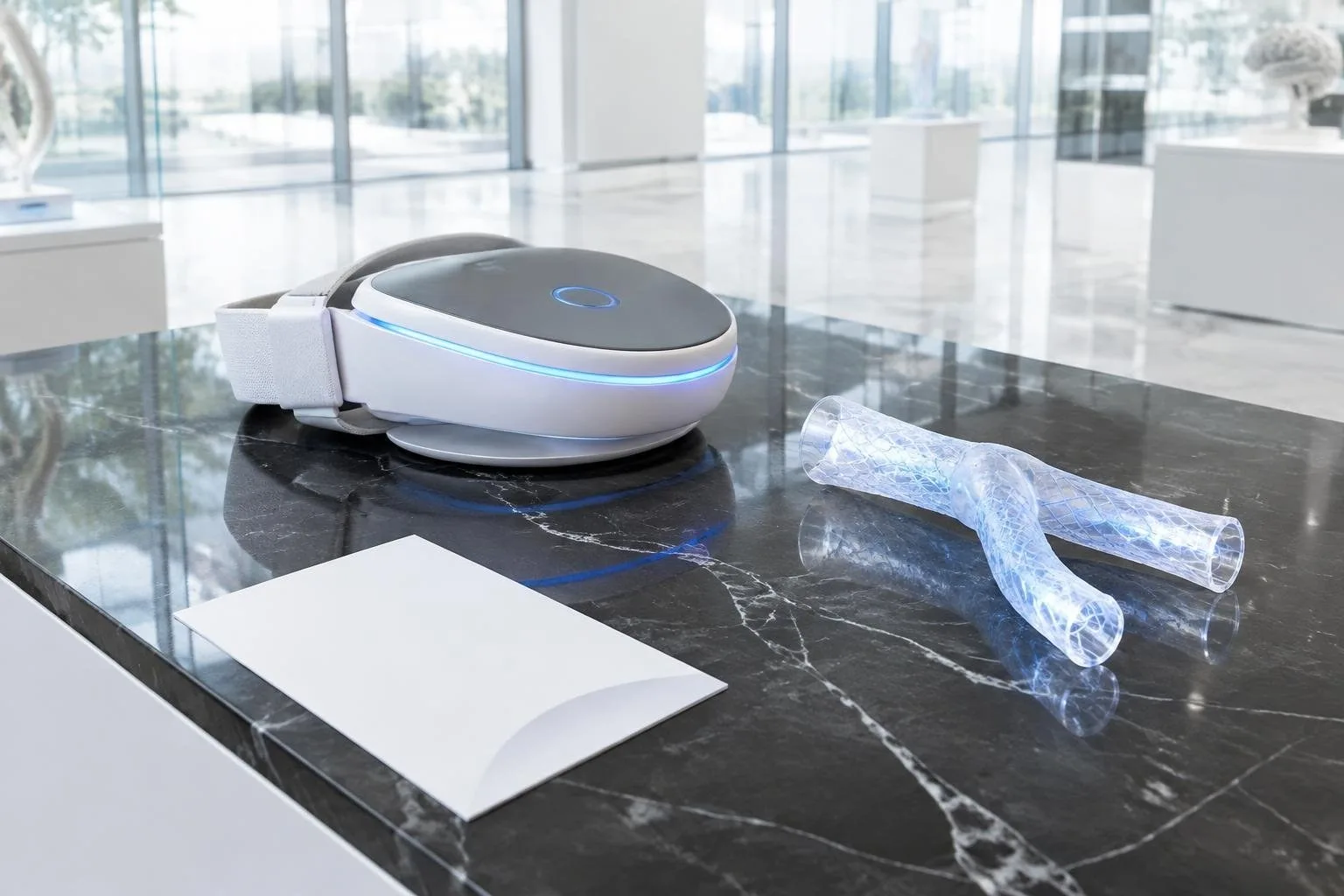
The American Heart Association (AHA) wrapped up its annual Scientific Sessions with a showcase of emerging medical technologies. The centerpiece was the Health Tech Competition, a global contest that draws dozens of innovators seeking to translate laboratory breakthroughs into bedside solutions for cardiovascular and neurovascular diseases.
After a multi-stage review by volunteer experts in medicine, engineering, and investment, five finalists were invited to present on the exhibition floor at McCormick Place, Chicago. Judges evaluated each entry on scientific rigor, commercial viability, and real-world impact, ultimately selecting two companies for the ceremony on November 9, 2026.
MedRhythms sweeps Best Business, Audience Choice and Overall awards
Boston-based MedRhythms earned a clean sweep, capturing the Best Business, Audience Choice, and Best Overall categories. The firm offers a prescription-grade, at-home neuro-rehabilitation system that pairs foot-mounted sensors with adaptive music cues to retrain gait after stroke or other neurological injuries.
How the platform works
Patients wear lightweight sensors that continuously record footfall patterns. Real-time algorithms analyse stride length, cadence, and symmetry, then modulate the tempo of a personalized music track to match the user’s movement. The rhythmic feedback encourages more regular stepping, aiming to boost walking speed and overall mobility without the need for in-clinic therapy sessions.
CEO Brian Harris emphasizes that millions of stroke survivors struggle to access consistent rehabilitation once discharged. By delivering a personalized, music-driven program directly to the home, MedRhythms seeks to bridge that gap and expand treatment reach. The accolades raise the company’s profile and help attract payors, clinicians, and patients alike.
Vascudyne wins Best Science for bioengineered vascular grafts
St. Paul, Minnesota, startup Vascudyne secured the Best Science award for its next-generation blood-vessel grafts. The technology replaces the traditional practice of harvesting a patient’s leg vein for coronary bypass, and it also offers a growth-compatible conduit for children born with congenital heart defects.
Science behind the graft
Vascudyne cultivates human donor cells on a scaffold that produces a collagen-rich extracellular matrix. After maturation, the cells are removed, leaving a decellularized framework. Once implanted, the patient’s own cells migrate into the matrix, transforming the graft into living tissue that can remodel and grow.
Chief Executive Zeeshan Syedain notes that surgeons have long faced a trade-off between autologous tissue, which heals but requires an additional incision, and synthetic conduits, which lack regenerative capacity. The company’s “off-the-shelf yet living” graft aims to unify the benefits of both approaches. The Best Science honor validates the pre-clinical data as Vascudyne moves deeper into clinical trials.
Other finalists and the judging process
Three additional innovators reached the final round. HEARTio of Pittsburgh is developing artificial-intelligence software that extracts coronary-artery disease risk from a standard electrocardiogram, eliminating the need for dyes or catheters. MEGI from Chicago focuses on an AI-driven platform for women’s heart health, maternal care, and hypertension management. Slovakian firm Seerlinq offers a fingertip photoplethysmography device that estimates cardiac filling pressure, alerting heart-failure patients to worsening status before hospitalization.
The AHA’s volunteer panel—comprised of cardiologists, digital-health specialists, investors, and industry leaders—assessed each presentation on a live stage in the Health Innovation Pavilion. Judges praised the finalists for aligning technology with genuine clinical problems, demonstrating robust data, and outlining sustainable business pathways. Lee Shapiro, chairman of the AHA board, remarked that the competition highlights how strong science, viable market strategy, and patient-centered design together propel health-tech forward.
While the awards spotlight promising solutions, the AHA clarifies that selection does not constitute endorsement, certification, or validation of any product’s clinical claims. The competition nonetheless provides a high-visibility platform for companies to attract partnerships, funding, and broader adoption of technologies that could reshape cardiovascular and neurovascular care.