
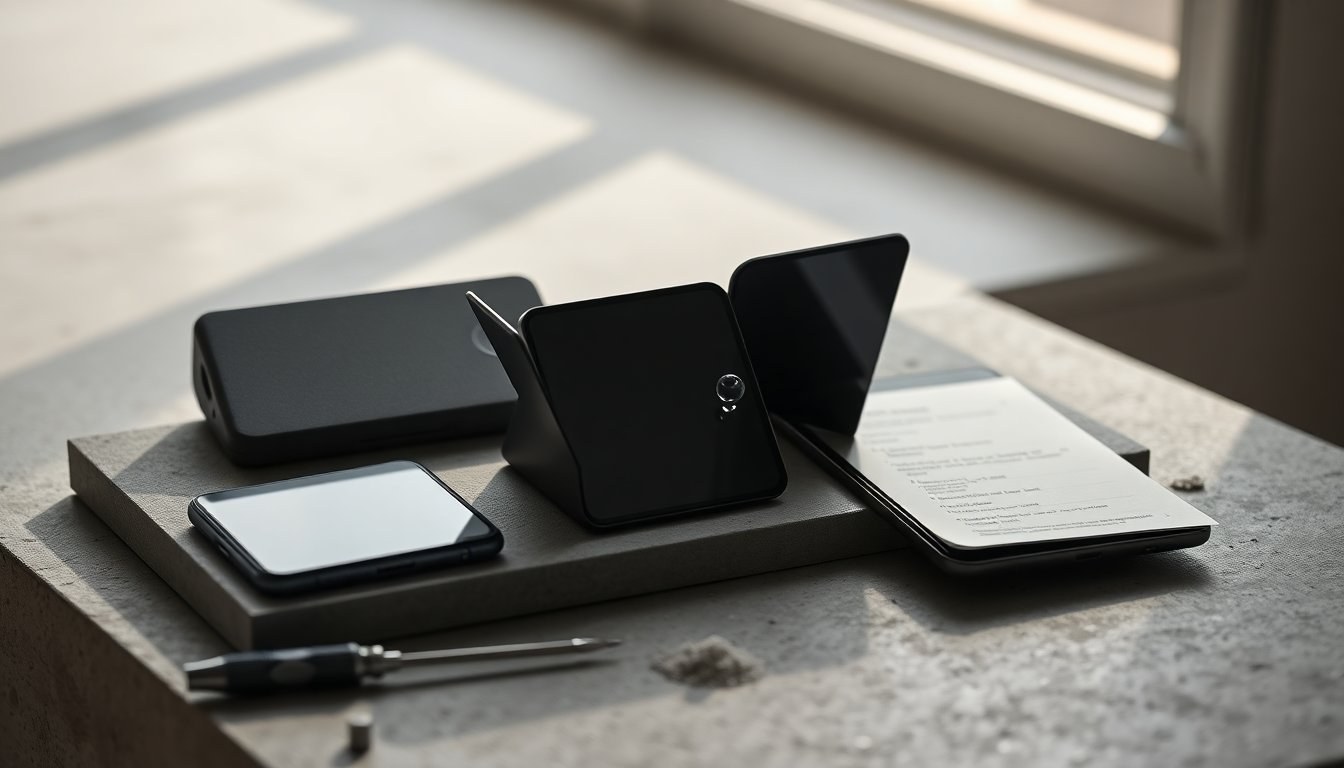
The mainstream smartphone landscape has settled into predictable glass-and-metal designs, which is why the return of the folding handset felt like a breath of fresh air. Early foldables drew attention but suffered from fragile hinges, screen problems, and limited usefulness. Today, however, many of those weaknesses have been addressed: manufacturers improved ingress protection, battery life, and day-to-day reliability. If you are weighing a purchase, focus on durability, software longevity, and how well a device performs both as a pocketable phone and as a large-screen device. The foldable phone market now includes polished options for commuters, creative workers, and anyone who wants a bigger canvas without carrying a separate tablet.
Why form factor matters: flip versus book
There are two clear approaches to folding hardware. A flip-style device folds a normal-sized phone in half so it slips into a pocket easily, while a book-style device unfolds into a tablet-like display for productivity and multitasking. Each approach forces compromises: flips emphasize portability and quick cover-screen interactions, whereas books prioritize expansive inner screens and longer battery life. Chinese brands like Oppo and Honor push impressive hardware but are often region-limited, so availability can influence your choice. Whatever you pick, pay attention to hinge protection, official dust/water ratings, and whether the outer display supports useful widgets or full app control — these practical details shape daily use more than raw specs alone.
Top flip-style contenders
Motorola Razr 2026, Razr 60 Ultra, and Samsung Galaxy Z Flip 7
Flip phones remain the most pocket-friendly foldables. The entry-level option, the Motorola Razr 2026 ($549.99), pairs an aluminum frame and a redesigned titanium hinge with a main 6.9-inch 120Hz inner OLED and a 3.6-inch 90Hz wraparound outer screen. It uses a MediaTek Dimensity 7400X, which is fine for daily tasks but limited for heavy gaming, and some users reported thermal-induced slowdowns outdoors. The Razr 60 Ultra ($799.99) upgrades to a Snapdragon 8 Elite, a 7-inch inner panel and a 4-inch 165Hz cover display, plus vivid color options and premium materials — though software support is only three years. Samsung’s Galaxy Z Flip 7 ($899.99) strikes a balance with an edge-to-edge cover display, a 6.9-inch LTPO AMOLED 120Hz inner screen, a 4,300mAh battery, and industry-leading seven years of software updates; its Exynos 2600 trails some competitors in raw benchmarks but delivers a refined experience.
Top book-style contenders
Honor Magic V5, Pixel 10 Pro Fold, Galaxy Fold 7, and Oppo Find N6
For users who need a true tablet experience, book-style foldables shine. The Honor Magic V5 is a compelling package with a thin unfolded profile, dual LTPO AMOLED displays hitting roughly 3,000 nits peak, and a 5,820 mAh silicon-carbon battery; it packs a 50MP main, a 64MP 3x telephoto, and a 50MP ultrawide, but it isn’t sold widely in the U.S. Google’s Pixel 10 Pro Fold ($1,799) aims for clean software integration: an 8-inch inner panel running Android 16, generous AI features such as Magic Cue, and an IP68 seal. It uses the Tensor G5, which lags multi-core leaders, and its camera hardware is carried over from prior Pixel folds. Samsung’s Galaxy Fold 7 ($1,675) went thin and light with a 4.2mm unfolded chassis, top-tier QHD AMOLED panels, a 200MP primary sensor and the Snapdragon 8 Elite for Samsung, but sacrifices stylus support. Oppo’s Find N6—available primarily outside the U.S.—delivers a near crease-free experience, a 200MP main camera co-tuned with Hasselblad, a 6,000 mAh battery, IP59 protection, and even retained stylus support, making it a best-in-class pick for photographers and power users.
What to watch for and how we ranked these phones
Choosing a foldable means balancing screen tech, hinge robustness, camera performance, battery life, and software updates. We evaluated how these phones behave as regular phones and as large-screen devices: gaming stability under load, photo quality across lighting conditions, and real-world resilience to dust and water. Our findings combine hands-on testing with synthesis of reputable reviews from outlets such as TechRadar, PhoneArena, and MrMobile, and we included Chinese flagships to reflect the global market. In short: prioritize official ingress protection and multi-year software support if longevity matters, and prefer higher-capacity batteries if you use the big display often.
Foldables are no longer fragile curiosities; many can serve as everyday phones with big-screen benefits. Whether you lean toward a compact flip or a productivity-oriented book device, the models above represent the most balanced choices today. Match the device strengths to your priorities — camera fidelity, battery endurance, or pocketability — and you’ll find a foldable that fits your workflow without the compromises that plagued the first generation.


