
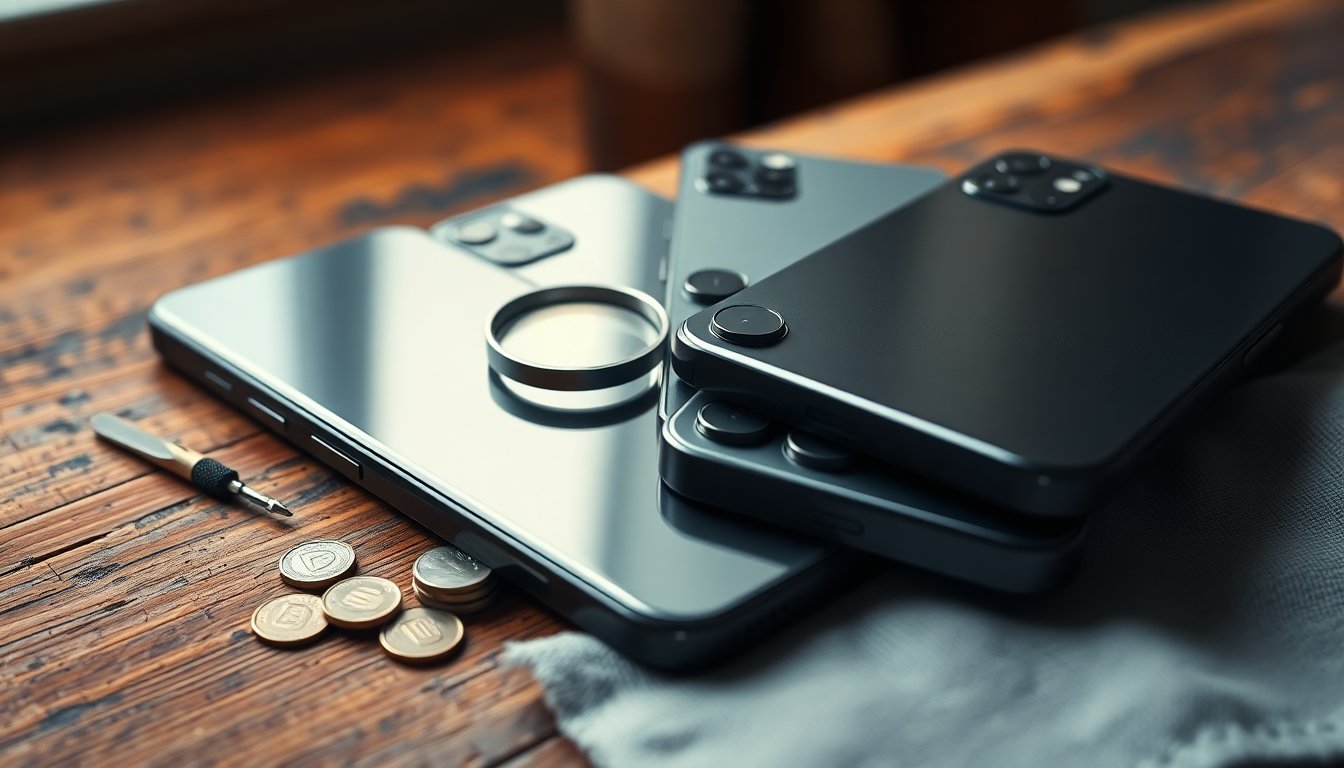
Buying a high-end smartphone new can be expensive, and flagship models often lose their headline appeal within a year. If you want excellent camera performance without paying full price, the second-hand market and certified refurbished phones are rich sources of value. This guide highlights tried-and-tested older models, sensible price ranges, and practical buying advice so you can enjoy flagship-level photography without the flagship bill. Expect to find options across several budgets and clear guidance on what to inspect before you commit.
Throughout this article we focus on image quality, longevity and safety when shopping. You’ll read about standout models such as the iPhone 16 Pro Max, Samsung Galaxy S25 Ultra and the Google Pixel family, with realistic used-price bands. We also explain essential terms like refurbished and second-hand, and show specific checks—battery, warranty, and camera optics—that protect your purchase and preserve resale value.
Why buy used or refurbished phones for photography
Flagship phones deliver top-tier sensors, lenses and image processing, but their release cycle is rapid and prices fall fast. Purchasing a recent model second-hand can cut hundreds of dollars or pounds while retaining almost all photographic capability. Consider that brands like Apple and Google often keep providing software support for multiple years, which helps maintain security and features. Buying used also reduces waste by keeping a device in circulation rather than creating demand for a brand-new unit; that extra environmental benefit is a useful bonus when choosing a second-hand phone.
Top picks by price band
Under $800 / £800
If your budget allows, several late-generation flagships give you exceptional cameras at reduced prices. The iPhone 16 Pro Max launched at $1,199 / £1,199 (256GB model) but can often be found used for roughly $700–$1,199 (256GB). It retains high image and video quality, a large 6.9-inch display and Apple’s computational photography. The Samsung Galaxy S25 Ultra, which debuted at $1,299 / £1,249, is another strong choice and is commonly available used in the $749–$950 / £635–£900 range; its quad-camera system includes high-megapixel sensors and multiple zoom options, plus robust AI shooting modes.
Under $500 / £500
Mid-range to older flagship phones deliver compelling value. The Motorola Edge 50 Ultra originally sat in the mid-tier and now trades for much less; its high-resolution triple sensors (including two 50MP modules) make it a camera-focused bargain. The Google Pixel 9 Pro can also be surprisingly affordable on the used market—ranges like $374–$649 / £379–£680 have been seen—offering Pixel-style image processing and useful AI features such as group-shot merging. You can also find the iPhone 15 Pro Max and Samsung S24 Ultra in this band depending on condition.
Under $300 / £300 and budget options
Smaller budgets still yield strong performers. The Google Pixel 8 Pro often appears at attractive prices ($239–$400 / £217–£300) and supplies a capable triple-lens array, plus seven years of software updates on some Pixel models—an important longevity consideration. The Samsung Galaxy Z Flip 5 can be had for about $299–$465 / £253–£450 used; its folding design offers a unique selfie workflow, letting you use the main camera for higher-quality portraits. For sub-$200 shoppers, models like the Google Pixel 6a and the classic Huawei P30 Pro remain usable and affordable choices.
Where to buy and how to stay safe
There are three main channels: private sellers, specialist refurbishers and manufacturer/retailer outlets. Marketplaces such as eBay, Gumtree and Facebook Marketplace can offer low prices but require careful vetting. For greater peace of mind, choose certified sellers like Backmarket, Music Magpie, Envirofone, or manufacturer refurbished stores where a condition check and warranty are often provided. Always inspect serial numbers, request working photos, and confirm the device is not carrier-locked if you need an unlocked phone.
Practical buying checklist
Before you buy, verify the battery health, ask about any repairs, inspect camera lenses for scratches, and test the main shooting modes. Use protected payment methods like PayPal or a credit card to reduce risk. Watch for listings using generic manufacturer images—genuine sellers typically include photos of the working device. Finally, compare prices across platforms to spot outliers that might indicate hidden faults or scams.
Refurbished vs second-hand: what’s the difference?
Understanding terminology matters. A second-hand device typically means a private sale; you get no guaranteed warranty beyond consumer law and must rely on the seller’s honesty. A refurbished phone has been inspected, repaired if necessary, and graded by a professional before resale; refurbished units usually come with a condition rating and a short warranty. The slightly higher price for refurbished goods often buys you confidence and return options—important when purchasing expensive camera phones.
With the right checks and a clear budget, buying used is a practical way to access premium camera features without paying full price. Use the model and price examples above as a starting point, and always prioritize seller checks and battery/camera condition to ensure your next phone takes great pictures and lasts.


