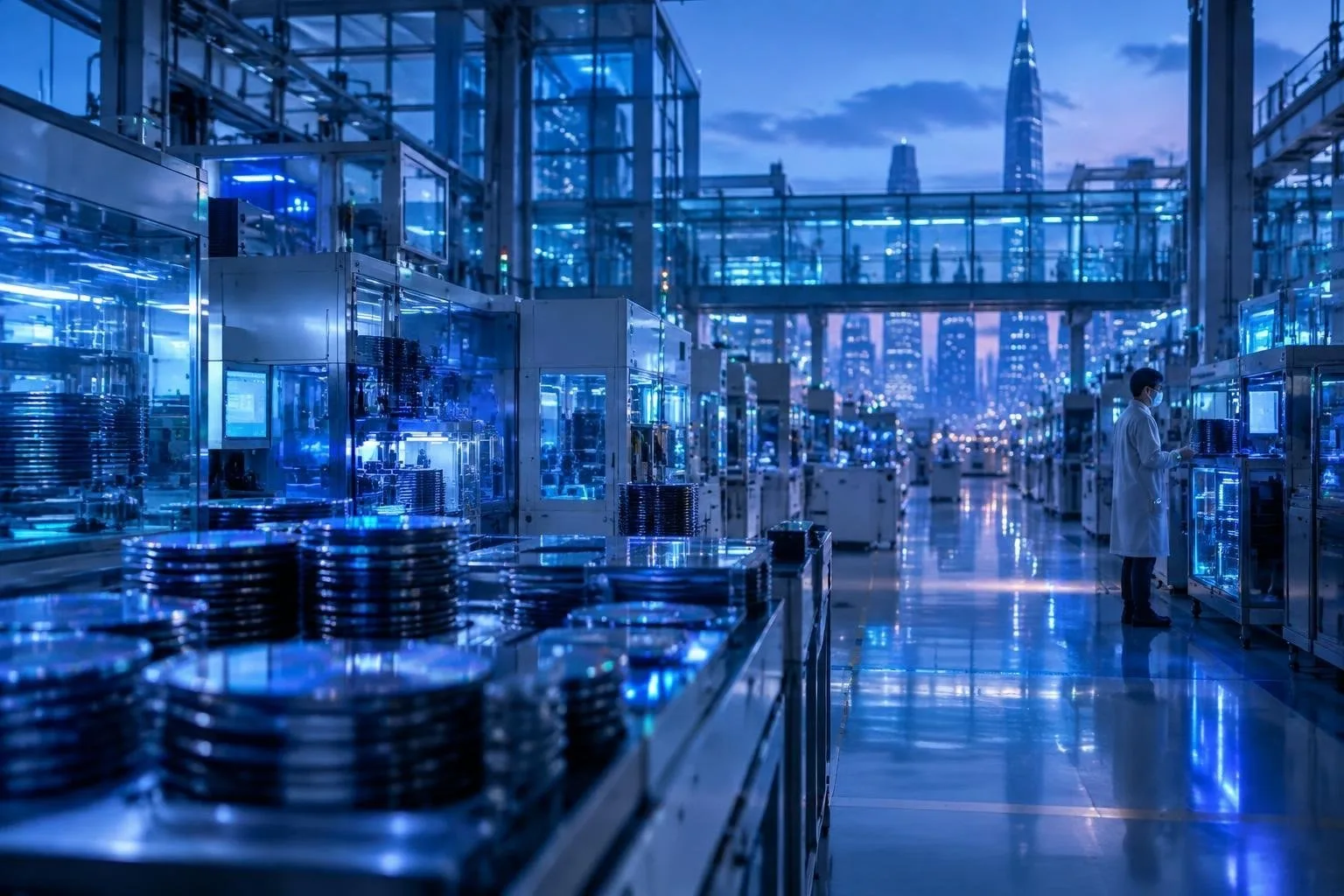
Shenzhen is no longer just the world’s factory floor. As the host city for the APEC Summit in November 2026, the metropolis presents a model of scalable innovation where advanced semiconductor manufacturing converges with consumer-grade deep tech. This transition marks a decisive move beyond simple hardware assembly toward genuine research and development leadership, anchored by a dense ecosystem of suppliers and startups.
The Economic Backbone of Strategic Emerging Industries
The scale of this transformation is visible in the numbers. According to municipal government data, the added value of Shenzhen’s strategic emerging industries reached RMB 1.67 trillion last year. This figure accounts for 43% of the city’s GDP, underscoring the centrality of technology to its economic engine. The city is home to more than 25,000 high-tech enterprises, placing it among the leading innovators nationwide. Nanshan District alone hosts over 5,500 of these firms, creating a concentrated cluster of talent and capital.
This density facilitates rapid iteration. Companies like Slkor provide the foundational components, offering discrete semiconductor devices such as diodes, transistors, and power devices, alongside integrated circuits including linear regulators, DC-DC converters, and battery management systems. These components are essential for the complex electronics required by modern wearable technology, allowing local firms to source critical parts within hours rather than weeks.
Huaqiangbei’s Role in Deep Tech Innovation
Huaqiangbei has evolved from a market for electronic components into a breeding ground for technology startups. Song Shiqiang of Kinghelm summarized the cultural drivers of this area as “Boldness, Innovation, Resilience, and Pragmatism.” This environment supports companies like Gedowei Technology, whose founder Ruan Shidie highlights the competitive advantage derived from this local integration.
Gedowei produces smart glasses capable of monitoring cervical spine health and providing fall alerts for elderly users. Ruan Shidie notes that China’s smart glasses technology is now among the world’s leading. “We have advantages in product design, supply chain integration, and core chip technology, as well as in pricing and overall value for money,” he stated. The cost efficiency is stark: “If the same product were developed overseas, it would probably cost three times as much. Our product costs only one-third of that price, yet delivers quality that customers are very satisfied with.”
This capability stems from an intense work ethic and accumulated experience. Ruan described the relentless pace of development: “Our R&D work often requires us to stay up all night. To develop the latest smart glasses, we sometimes work straight through until seven in the morning.” He framed this as the spirit of Shenzhen, characterized by a “determination to strive, work hard, and succeed.”
Global Visibility Through APEC
The APEC Summit serves as a stage for this technological maturity. LAM Hon-shan, Principal Reporter of Radio Television Hong Kong (RTHK), noted that the summit allows the international community to witness the “rapid speed of its growth.” Cheng Yimu of the Shenzhen Electronics Chamber of Commerce emphasized that the city’s comprehensive supply chain is key to maintaining this trajectory.
The convergence of semiconductor capabilities and consumer electronics creates a feedback loop that strengthens both sectors. As Shenzhen positions itself as a steward of multilateral trade and digital connectivity, its domestic industry demonstrates that scalable innovation relies on the seamless integration of component sourcing, rapid prototyping, and aggressive R&D investment. The result is a high-tech sector that not only competes globally but sets standards for cost-performance ratios in deep tech applications.