Humanity’s dependence on digital infrastructure has created a silent vulnerability originating 93 million miles away. Space weather, driven by solar activity, poses a significant threat to the systems that power daily life, including GPS navigation, satellite communications, and the electrical grid. Shawn Dahl, a service coordinator at the Space Weather Prediction Center, emphasizes that the primary risk is not to human health directly, but to the critical technological backbone of modern civilization.
The impact extends beyond theoretical models into operational reality. The aviation industry, increasingly reliant on precision GPS approaches for landing, faces immediate challenges during geomagnetic storms. Signal degradation has already caused flight diversions, highlighting the fragility of air travel networks. Simultaneously, the rising electricity demand from data centers and artificial intelligence places additional strain on power grids, which are among the most impacted entities during severe solar events.
Breaching the Magnetospheric Shield
A breakthrough study published in late 2026 fundamentally altered scientific understanding of Earth’s protective layers. Data captured by the Japanese Arase space probe during a significant 2024 solar storm revealed that the planet’s radiation barrier is more permeable than previously thought. Researchers at Nagoya University found evidence of ultrarelativistic electrons appearing deep within the inner radiation belt, challenging the long-held belief that these particles only migrate inward from outer space.
This phenomenon, known as local acceleration, occurs when plasma waves transfer energy directly to electrons trapped within the magnetosphere. The findings indicate that solar storms can trigger intense, localized surges in electron flux, bypassing traditional shielding assumptions. This discovery requires a recalibration of space weather prediction models and suggests that sensitive electronics in low-Earth orbit may face higher radiation doses than current safety standards account for.
The Transformer Bottleneck
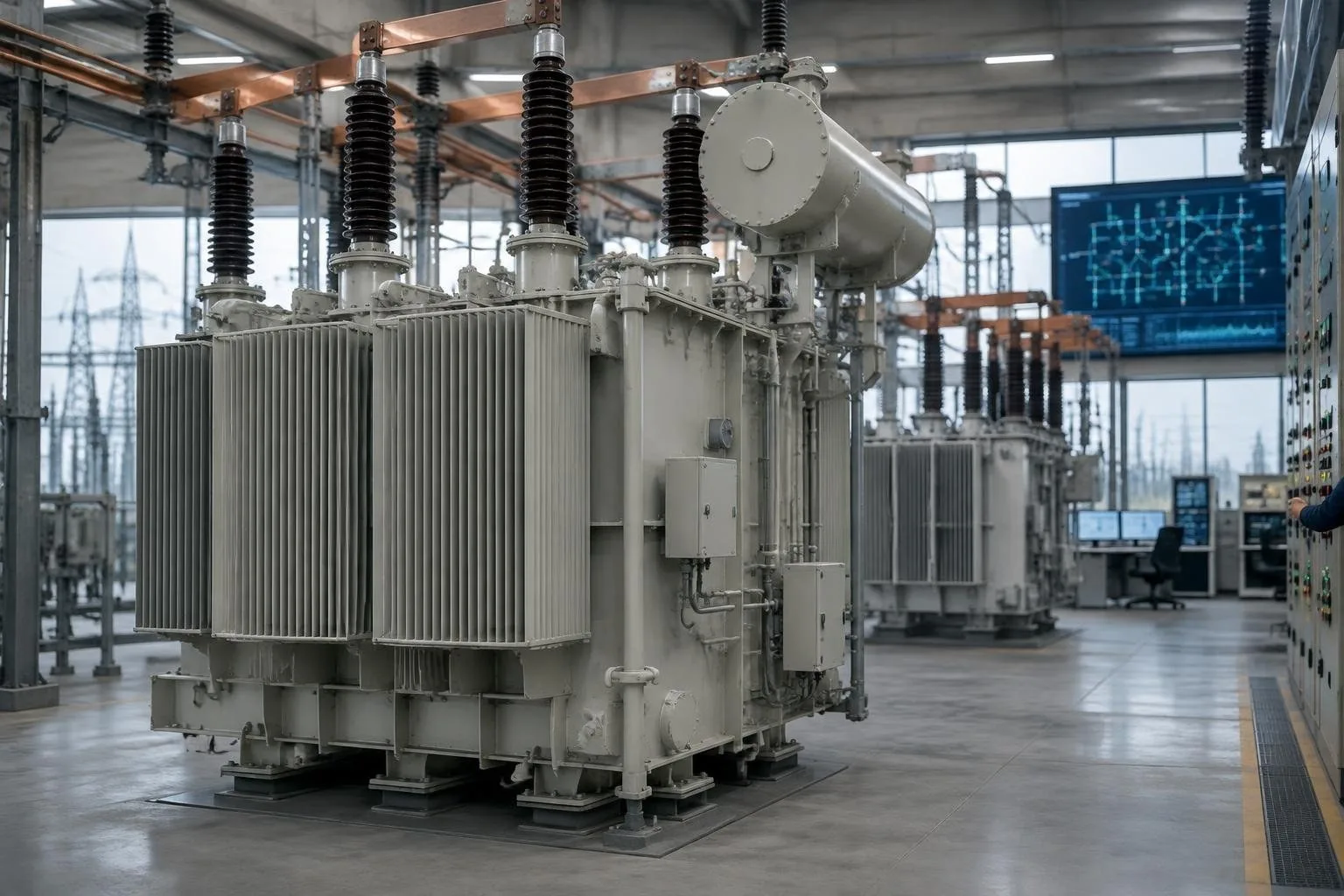
While satellites face radiation risks, ground-based infrastructure contends with physical destruction. Elon Musk noted in April 2025 that the constraint for AI scaling would shift from chips to voltage transformers. These massive components, essential for stepping down high-voltage electricity, are largely imported, with about 70 to 80% sourced overseas. Replacement times stretch from two and a half years to six, leaving no spare inventory for rapid recovery.
A severe solar storm or high-altitude nuclear detonation can drive electric currents through the ground, overheating and destroying these transformers. Historical precedents underscore the danger: the 1859 Carrington Event disrupted telegraph lines, while the 1989 Quebec blackout left millions without power for nine hours. A USGS study estimates that a Carrington-class storm today would generate ground electric fields 55% stronger than those seen in 1989.
Comparative Risk Assessment
The probability of such an event is alarmingly high relative to other insured risks. The North American Electric Reliability Corporation (NERC) plans for storms occurring roughly once every hundred years, implying a one-in-ten chance over any decade. This is four times the likelihood of home fires and vastly exceeds aviation accident rates. If a major storm strikes, the result could be months-long outages, disrupting water pumps, refrigeration, and medical services.
Past disasters like Hurricane Maria in Puerto Rico demonstrate the catastrophic human cost of prolonged grid failure, with thousands of excess deaths recorded after extended blackouts. Unlike weather-related damage, however, solar storm impacts target the specific, irreplaceable machinery of the grid. Protecting large transformers from ground currents remains the most immediate, yet neglected, line of defense against this existential technological threat.