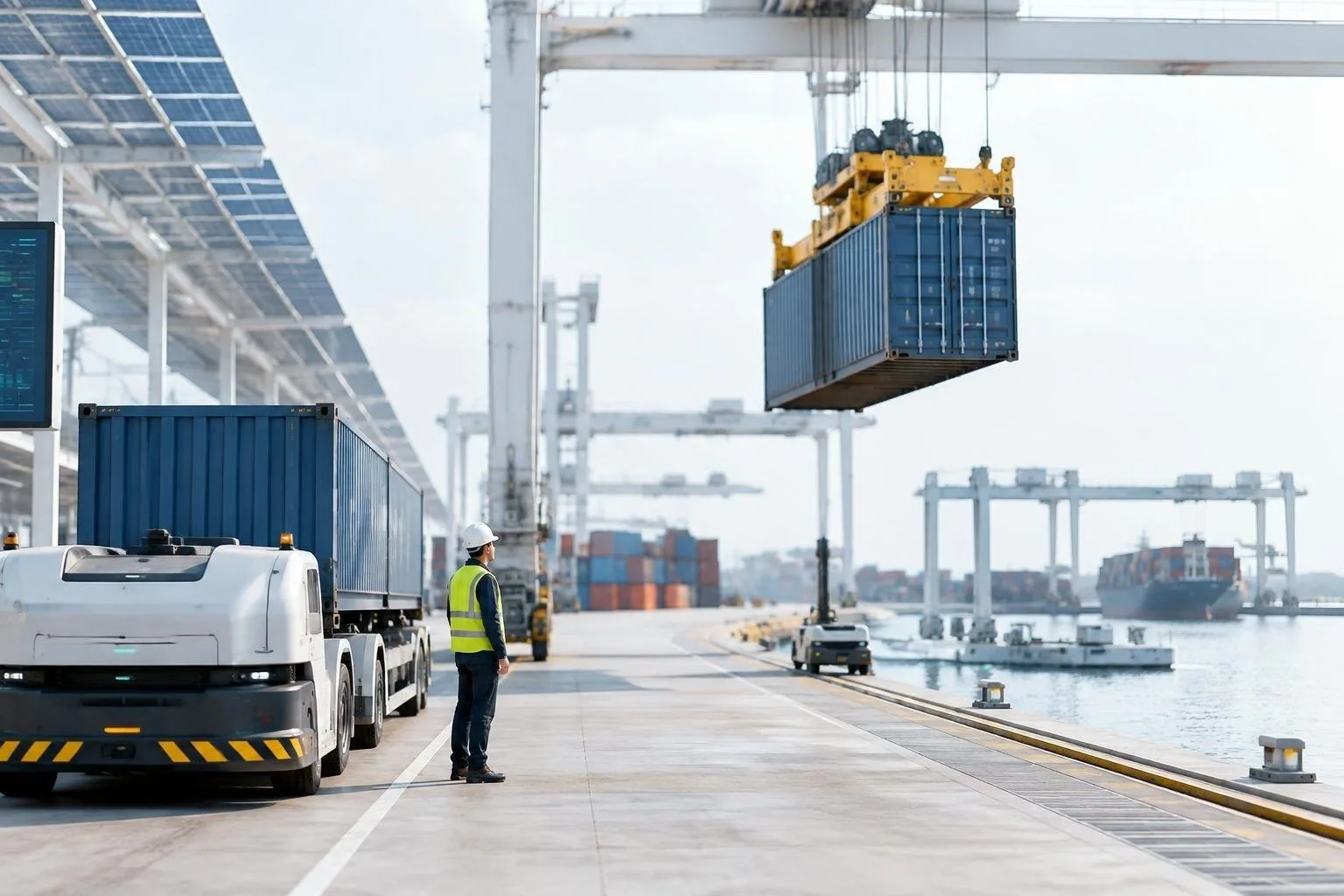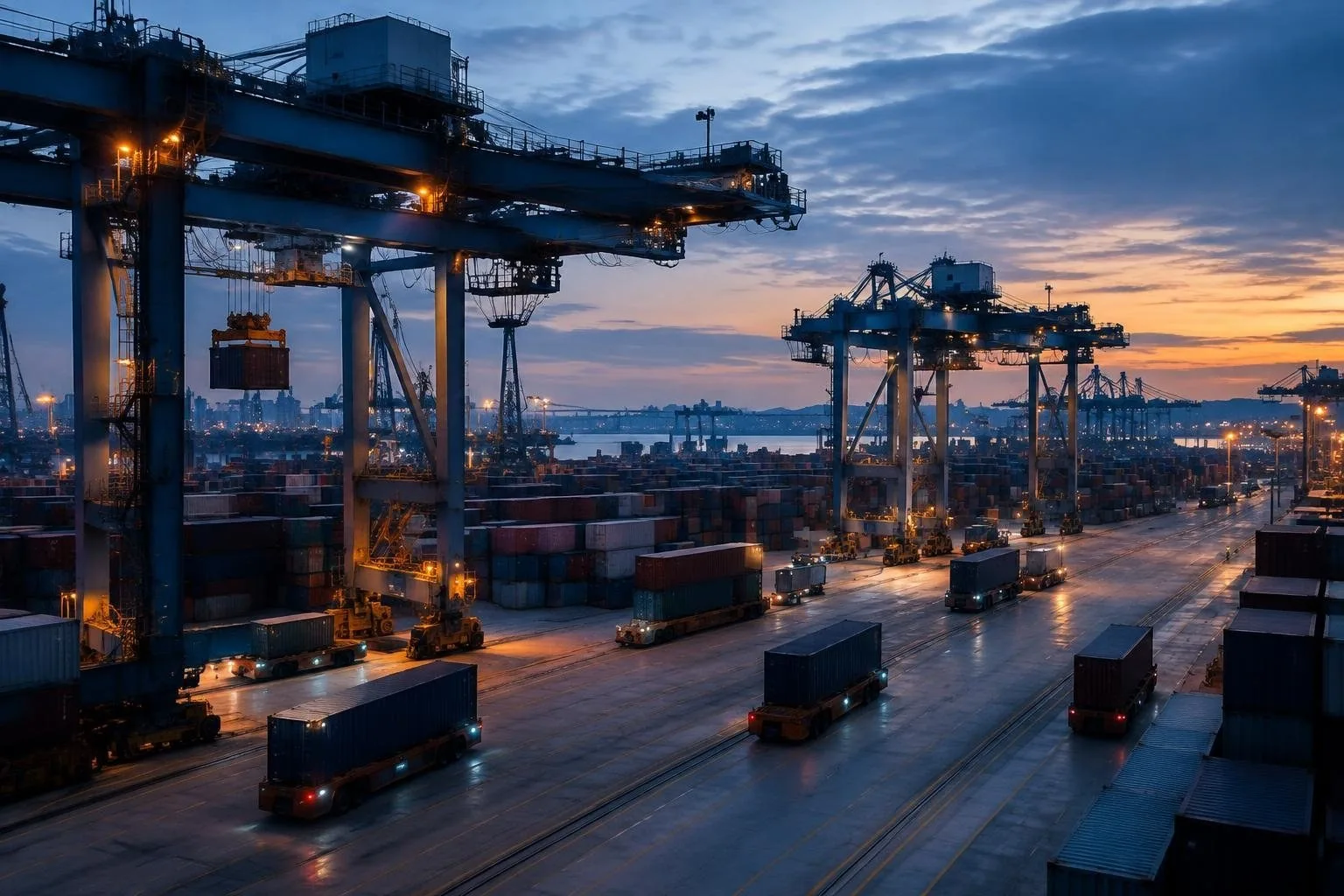
Next week, world leaders will converge on Shenzhen, a city that has become the showcase for China’s vision of a fully automated maritime hub. The Mawan Terminal already runs driverless trucks, remotely operated cranes and a suite of artificial-intelligence applications, offering a glimpse of a future where ports operate with minimal human intervention. Beijing hopes that this high-tech infrastructure will translate into a strategic edge in an industry that moves more than 80% of global goods by volume.
China’s automated ports and the race for maritime supremacy
According to the transport ministry, China now operates 60 fully automated terminals – the most worldwide – and targets 90 by 2030. The flagship New Qianwan Container Terminal in Qingdao claims the title of the world’s first completely robot-run dock, where a single crane can shift 61 containers per hour, more than double the speed of conventional equipment. By contrast, a 2024 U.S. Government Accountability Office report noted that the ten largest American ports lag behind their foreign peers in automation, hindered largely by strong labour-union resistance.
These domestic successes supply a massive testbed for Chinese firms eager to export their technology. Companies such as Westwell, which builds autonomous trucks, now operate vehicles at Felixstowe – the United Kingdom’s busiest container hub – while telecom giant Huawei packages integrated smart-port solutions for overseas customers. The rapid deployment of AI-driven customs databases and electronic bills of lading is also part of the push, with China proposing to lead APEC working groups on these topics during the summit on November 18-19.
Strategic worries from the West and the LOGINK setback
Western security analysts warn that the diffusion of China’s port technology could create a new form of dependency. Isaac Kardon of the Institute for Defense Analyses describes the situation as “an uncomfortable dependence” that might enable Beijing to wield economic coercion, exploit software back-doors, or even cripple trade routes in a crisis. The risk is not merely theoretical; the quiet collapse of LOGINK, a China-backed logistics data platform, highlighted how a digital infrastructure could be perceived as a potential “trade superweapon.”
U.S. officials pressured allies and international organisations to distance themselves from LOGINK, citing fears that the platform could give Beijing insight into sensitive cargo, including military shipments. The episode also underscored the difficulty China faces in displacing entrenched Western players in the terminal operating system (TOS) market, a sector long dominated by U.S. firms that coordinate vessel movements, cargo handling and customs processing.
Belt and Road, export of smart-port tech and the APEC agenda
China’s maritime ambition dovetails with its broader Belt and Road Initiative, which has funneled roughly $15.5 billion into building or acquiring stakes in foreign ports and an additional $4.8 billion into equipment for 69 ports across 47 countries since 2000, according to research from William & Mary’s AidData lab. The strategy promises developing nations faster turnaround times and tighter integration with the world’s second-largest economy.
Recent filings from state-owned China Merchants Port reveal a “key transport ministry project” to replace foreign TOS solutions at international terminals, citing successful installations at Brazil’s Paranagua port and further roll-outs in Sri Lanka, Greece, Italy and Turkey. While adoption of Chinese software remains uneven, the willingness to invest in long-term pilots suggests a patient, strategic approach aimed at eroding the monopoly of Western vendors.
As the APEC summit approaches, Beijing is positioning its digital-port agenda as a win-win: faster customs clearance, reduced paperwork and a greener supply chain. Yet the same narrative fuels concerns that the country could leverage this infrastructure for geopolitical gain, turning the seamless flow of containers into a lever of influence.