
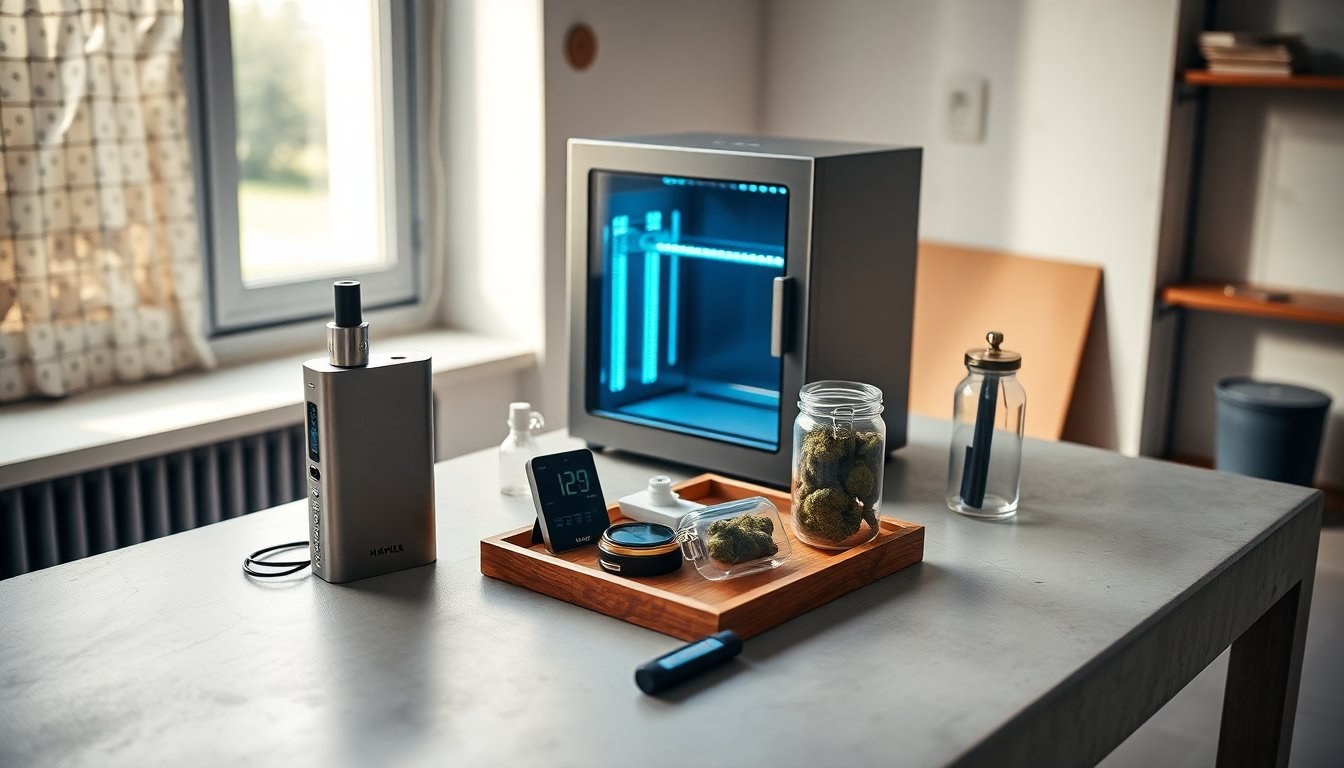
The intersection of technology and cannabis has accelerated since legal shifts opened the market. When Colorado approved Amendment 64 in 2012 and recreational sales began in January 2014, entrepreneurs and engineers alike found a legal runway to experiment. That environment fostered a wave of gadgets that move beyond the simple joint: manufacturers have introduced everything from temperature-controlled vaporizers to app-managed grow cabinets. These innovations prioritize consistency, safety, and convenience while expanding the ways people interact with cannabis.
Today’s devices aim to make cannabis accessible to a wider audience by borrowing cues from mainstream consumer electronics and appliances. Whether someone wants a discreet on-the-go experience or a countertop appliance that automates infusion, the market now offers specialized tools. The common thread is the addition of smart controls and mechanical refinements that remove guesswork. For readers curious about how these products differ and what they offer, the sections below break down the key concepts and highlight representative devices.
Why technology matters in modern cannabis
Technological advances address several long-standing challenges in cannabis use: variability in dosing, safety concerns with open flames or heated torches, and the stigma that keeps some users away. Companies have focused on precision heating, secure batteries, and app-based profiles to deliver repeatable results. At the same time, integration of features like carbon filtration and automated nutrient dosing for cultivation appliances reduces odor and waste. These improvements make consumption and cultivation more predictable and, in many cases, safer for casual and experienced users alike.
Smart controls, safety, and user experience
Two technical trends stand out: first, the adoption of microcontroller-driven temperature management; second, the move to sealed systems that minimize combustion. Devices using temperature calibration and programmable cycles give users repeatable outputs, important when working with concentrated extracts or dosing edibles. Many gadgets provide visual cues like an LED band or tactile cues such as haptic feedback to indicate readiness, battery level, or mode changes. Together, these design choices prioritize reliable performance and lower the barrier to entry for new users.
Standout devices and what they do
Concentrate-focused tools
For consumers who prefer extracts, purpose-built hardware has evolved quickly. One desktop example is the Puffco Peak, introduced at CES 2018, which many called the first mainstream smart rig. The Peak combines controlled heating with a liquid chamber to cool vapor, and it offers multiple pre-set temperatures plus a boost mode for larger draws. Its Intelligent Temperature Calibration adapts heat cycles after each use to preserve flavor and consistency. On the portable side, the Puffco Plus functions as a pocket-sized pocket nail, featuring a coilless chamber for cleaner flavor, three temperature levels, and a continuous heat mode that maintains warmth for extended hits without holding a button.
Home cultivation and everyday consumption
Other categories focus on home preparation and cultivation. The Magical Butter MB2E automates the laborious infusion process that turns cannabinoids into edible fats; set temperature and time, and the unit extracts reliably, producing butters, tinctures, or topicals without constant supervision. For growers, LEAF sells a plug ‘n’ plant appliance that pairs with a mobile app to control lighting, humidity, temperature, nutrient dosing, and pH, and it includes a carbon filter and a drying mode to manage odor and post-harvest processing. On the consumer convenience front, the Wisp offers a pod-based vapor system—think of a single-serve solution similar to capsule coffee machines—which aims to demystify vaping for beginners. For dry herb enthusiasts, the PAX 3 remains a popular premium option: it heats in roughly 22 seconds, supports more than 60 temperature settings via Bluetooth and an app, accepts a concentrate insert for versatility, and typically delivers 8–10 sessions per charge, recharging in about an hour.
What to take away
Modern cannabis hardware spans a wide spectrum: from high-end desktop rigs to kitchen appliances and compact pens. The common value proposition is consistency—devices standardize temperature, delivery, and dosing in ways that hand-rolled or improvised methods cannot. For consumers, that means safer, more predictable experiences. For creators and technicians, the field remains fertile: regulatory clarity in many regions continues to invite iterative improvements. Whether you prioritize portability, flavor fidelity, or turnkey home cultivation, the current crop of products shows how engineering can transform the way cannabis is grown, prepared, and enjoyed.


