
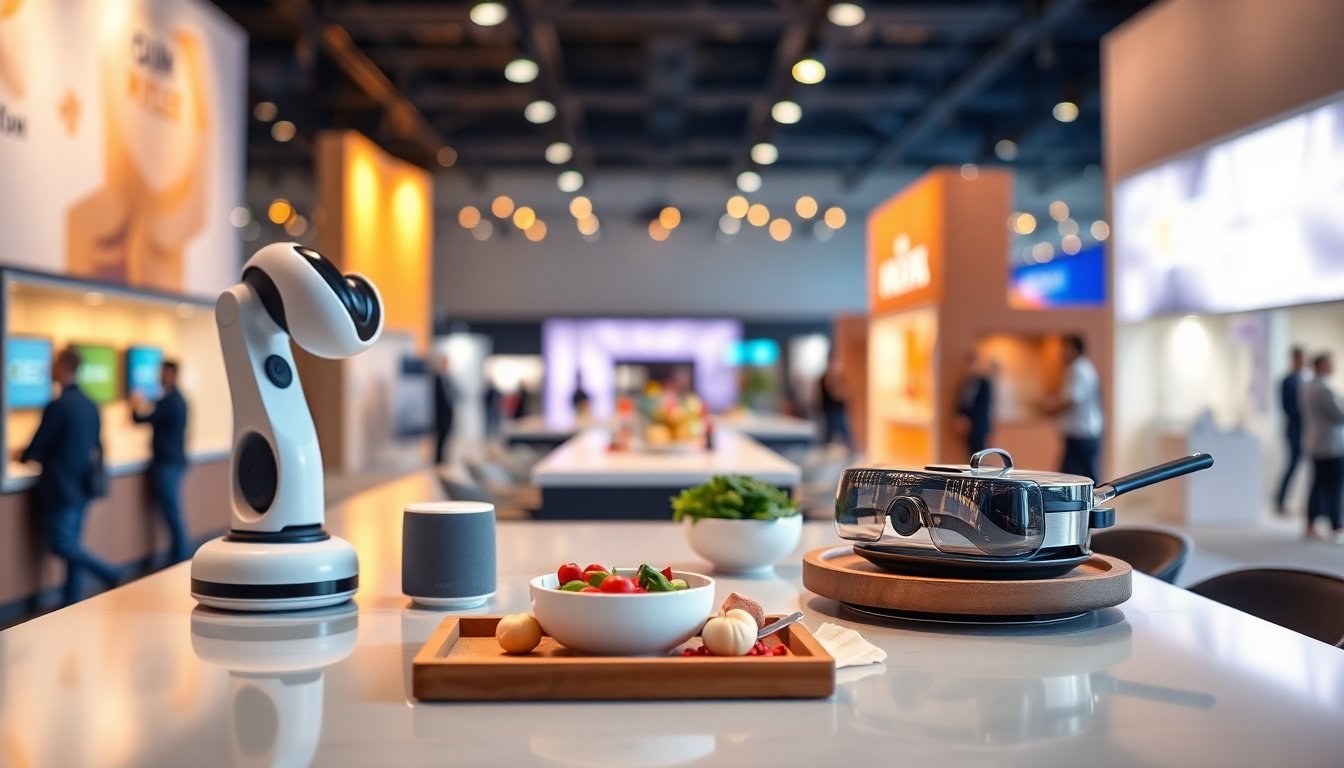
The Consumer Electronics Show has long been a stage where prototypes and prototypes-only ideas meet the real world, and CES 2026 was no exception. This year’s exhibits made one thing clear: household technology is evolving from connected devices into a cohesive, intuitive environment that actively supports daily life. Exhibitors placed emphasis on systems that learn and adapt rather than merely follow commands, and that shift reshapes how we think about convenience, safety, and comfort. In the displays and demos, patterns emerged around three pillars: robotics, AI-driven kitchen appliances, and immersive lighting and entertainment, each promising to make the home less reactive and more anticipatory.
What matters beyond buzzwords is the way these advances combine. The most striking installations framed the home as a collaborative partner—an ecosystem that senses routines, inventories supplies, and sets the atmosphere for activities from work to relaxation. Designers and engineers showcased systems that integrate with existing appliances and services while introducing new categories of devices that blur the line between tool and teammate. The demos highlighted not just technical feats but also user experience: seamless handoffs between devices, minimal setup friction, and AI models trained to respect privacy while offering helpful automation. That user-centric approach is as important as the hardware breakthroughs.
Robots moving from novelty to household helper
On the show floor, home robots were positioned as more than eye-catching gadgets; they were shown as practical assistants able to perform varied chores and interact with people. Autonomous cleaners like the Roborock Saros Rover demonstrated advanced mobility, including stair-climbing and multi-surface navigation, while prototype systems promised broader support for day-to-day tasks. Companies presented robots with modular capabilities—vacuuming, object retrieval, and even basic caregiving functions—designed to work alongside smart appliances and home networks. The emphasis was on reliability and adaptability: robots that understand floor plans, learn household habits, and hand off tasks to stationary devices when appropriate. That kind of coordination hints at a future where robots are routine collaborators rather than occasional curiosities.
Concepts and near-market examples
Some demonstrations were clearly conceptual, while others moved closer to retail readiness. For example, LG’s CLOiD appeared as an ambitious vision of a multi-purpose assistant able to handle cleaning, laundry, dishwashing, and basic cooking tasks; LG positioned this unit as part of a broader AI-driven home ecosystem that learns household patterns over time. CLOiD remains in development, reflecting industry direction rather than immediate availability, but it shows how companies are imagining integration across appliances. These concepts sit alongside more immediate offerings, illustrating a path from specialized single-task robots to integrated, learning companions capable of coordinating with distributed home systems.
Smart kitchens that plan, shop, and cook
The kitchen category moved beyond remote control to active assistance: refrigerators that track contents, ovens that recognize dishes, and appliances that help plan meals. Major brands unveiled solutions combining internal cameras, computer vision, and cloud-based recommendation engines to automate inventory management and reduce waste. The promise is practical: appliances that notify you when staples are low, suggest recipes based on what’s on hand, and even adjust cooking parameters automatically. These features aim to save time and reduce decision fatigue while linking to delivery and shopping services so replenishment is effortless. The result is a kitchen that functions like an attentive sous-chef rather than a passive box of tools.
Inventory, barcode scanning, and intelligent cooking
Demo units featured capabilities such as internal cameras that identify produce and packaged goods, integrated barcode scanning to streamline grocery lists, and AI models that recommend cooking modes. Examples included refrigerators with built-in identification systems that connect to grocery apps for easy restocking, and ranges using image recognition to select cooking profiles for dozens of dishes. These systems rely on a blend of on-device AI and cloud services to match ingredients to recipes and safety parameters. Together they point to a kitchen where planning, ordering, and cooking are increasingly automated tasks managed by the appliance ecosystem.
Lighting and entertainment that respond and immerse
Lighting and media captured attention by transforming rooms into adaptive environments that respond to mood, content, and time of day. Companies introduced high-density LED fixtures and AI tools that craft personalized lighting scenes, aligning with natural circadian rhythms and on-screen action to deepen immersion. These products not only enhance ambiance but also incorporate safety features—some fixtures include integrated sensors and cameras for subtle monitoring. Streaming devices, ultra-thin displays, and wireless audio systems were showcased as parts of a unified experience, where video, sound, and environmental cues combine to create cinematic or calming spaces on demand, controlled by intelligence that anticipates user preferences.
What these trends mean for everyday life
Taken together, the advances at CES 2026 suggest homes will increasingly behave like proactive partners—anticipating needs, conserving resources, and shaping environments for activity and wellness. While some concepts are still in development, the trajectory is clear: integration of AI, robotics, and sensory-rich hardware will make living spaces more responsive and less burdensome to manage. Adoption will depend on factors like price, privacy assurances, and ease of setup, but the foundations for an anticipatory, adaptive home are now visible. For consumers, that means moving toward households that do more than connect—they learn, predict, and assist.


