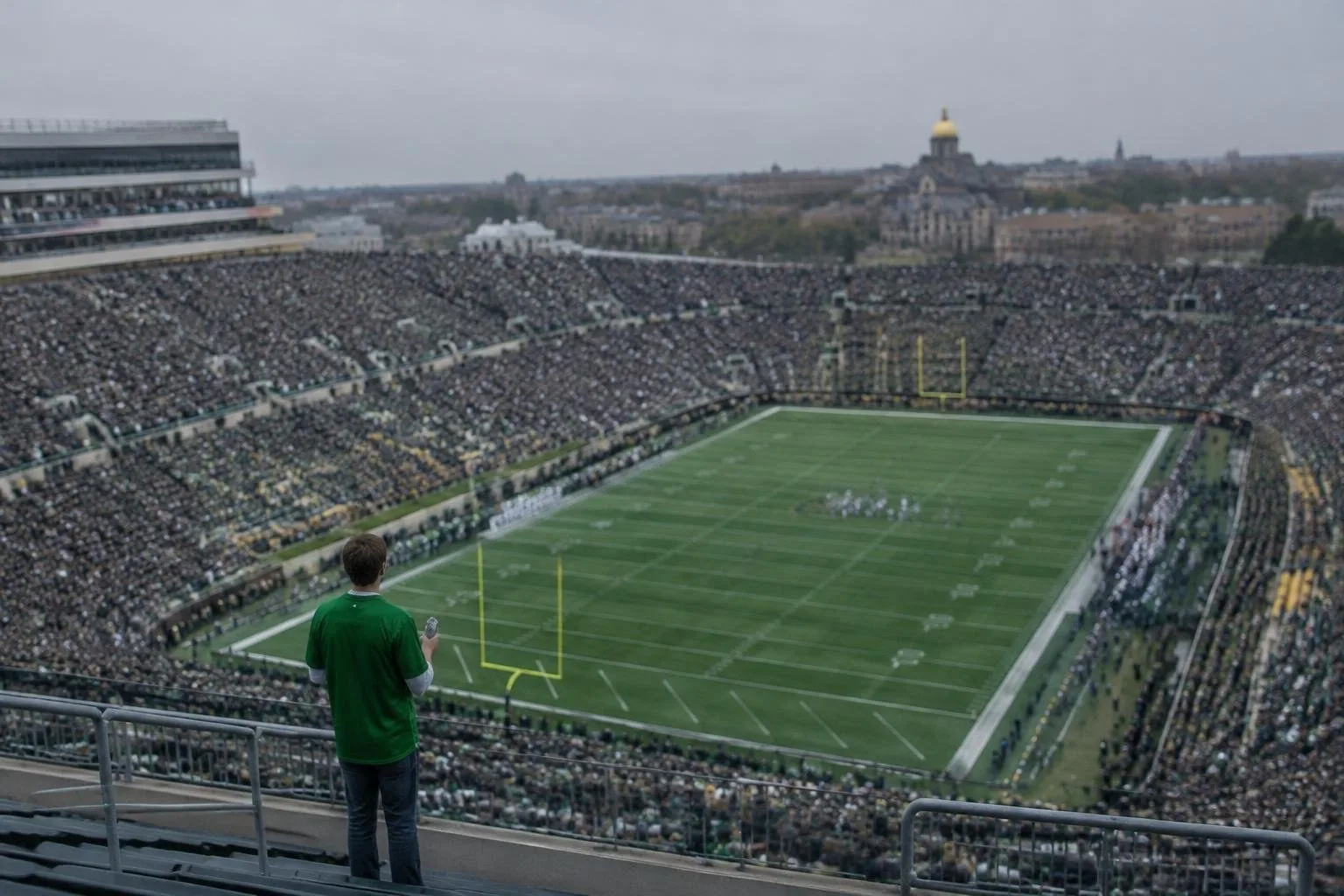
When the Fighting Irish welcome the Hurricanes this Saturday, spectators will notice more than the traditional sea of gold and blue. Every ticket-holder will find a sleek tech wristband waiting at their seat, a piece of wearable technology that promises to change how fans interact with the stadium environment. Kevin Cassidy, Notre Dame’s associate athletic director, described the devices as a first for college football, borrowing concepts from major concerts and pro-sport venues to create a seamless, contact-less experience for the crowd.
Wearable tech makes its debut at a college football stadium
The bracelets function as an all-in-one access pass – they can be tapped to enter the stadium, used for cash-less purchases at concessions, and even enable real-time polling for in-game entertainment. Cassidy emphasized that the technology has already proven its value at megahits like the Super Bowl, yet this is its inaugural appearance on a collegiate gridiron. “If you’ve been to some of the largest concerts or sporting events in the world, you’ve likely seen this system in action,” he explained, “but you haven’t seen it here until now.” The wristbands are pre-programmed and activated as fans walk past the entrance gates, eliminating the need for paper tickets and reducing queue times.
Parking plans and campus logistics for the big game
Beyond the gadgets, Notre Dame has rolled out an extensive traffic-management plan to accommodate the expected influx of visitors. Courtesy cart services will operate on Thursday, November 5, from noon to 5 p.m., supplementing the regular service on both Friday and Saturday. Starting at noon on Friday, November 6, the Burke, Dorr, and IP lots open for fans attending the 7 p.m. women’s basketball game, while all visitor lots become complimentary at 4 p.m. that same day. On game day, ESPN’s College GameDay broadcasts live from Library Lawn between 9 a.m. and noon, and the Golden Lot opens at 7 a.m. for anyone holding a pre-purchased parking pass. All other lots become available at 8 a.m., with zipper parking expected around 8:30 a.m. Reserved spaces are not guaranteed within 90 minutes of kickoff, and one-way inbound traffic patterns begin at 4 p.m., with strict enforcement against holding spots for later arrivals.
A rivalry that survived decades of drama
The Notre Dame-Miami clash is more than a schedule entry; it is a chapter of a rivalry that has sparked headlines since the 1950s. When the first meeting was announced, Miami officials warned they would not sell tickets until May 1, citing a flood of mail and phone calls from fans nationwide. The inaugural game drew a record-setting 75,685 spectators, each paying $5 for standard seats. Over the following decades, the series saw Notre Dame dominate early, only for Miami to reverse the tide in the late 1980s under coach Howard Schnellenberger and later Jimmy Johnson. Those Hurricanes, known for their swagger and “no-entitlement” mentality, once defeated the Irish 31-30 in 1988, a victory that propelled Miami to a national title. The animosity has evolved, but the sentiment remains palpable; former Miami receiver Randal “Thrill” Hill once told CNN Sports that the feeling between the schools is “hate-hate” – a fierce, almost tribal opposition that still fuels fan excitement.
This Saturday’s matchup pits Marcus Freeman’s disciplined Irish against Mario Cristobal’s fiery Hurricanes, echoing the contrasting philosophies of past coaches Lou Holtz and Jimmy Johnson. Freeman’s squad leads the nation in fewest penalties, while Cristobal’s team embraces a more aggressive, high-energy style reminiscent of the 1980s Canes. Both programs sit on the cusp of national relevance – Notre Dame seeks a playoff berth after a controversial loss to BYU, and Miami aims to reclaim the top spot it last held in 2002. The convergence of cutting-edge wristband technology, meticulous parking coordination, and a rivalry steeped in history ensures the game will be remembered as much for its innovations as for its on-field drama.