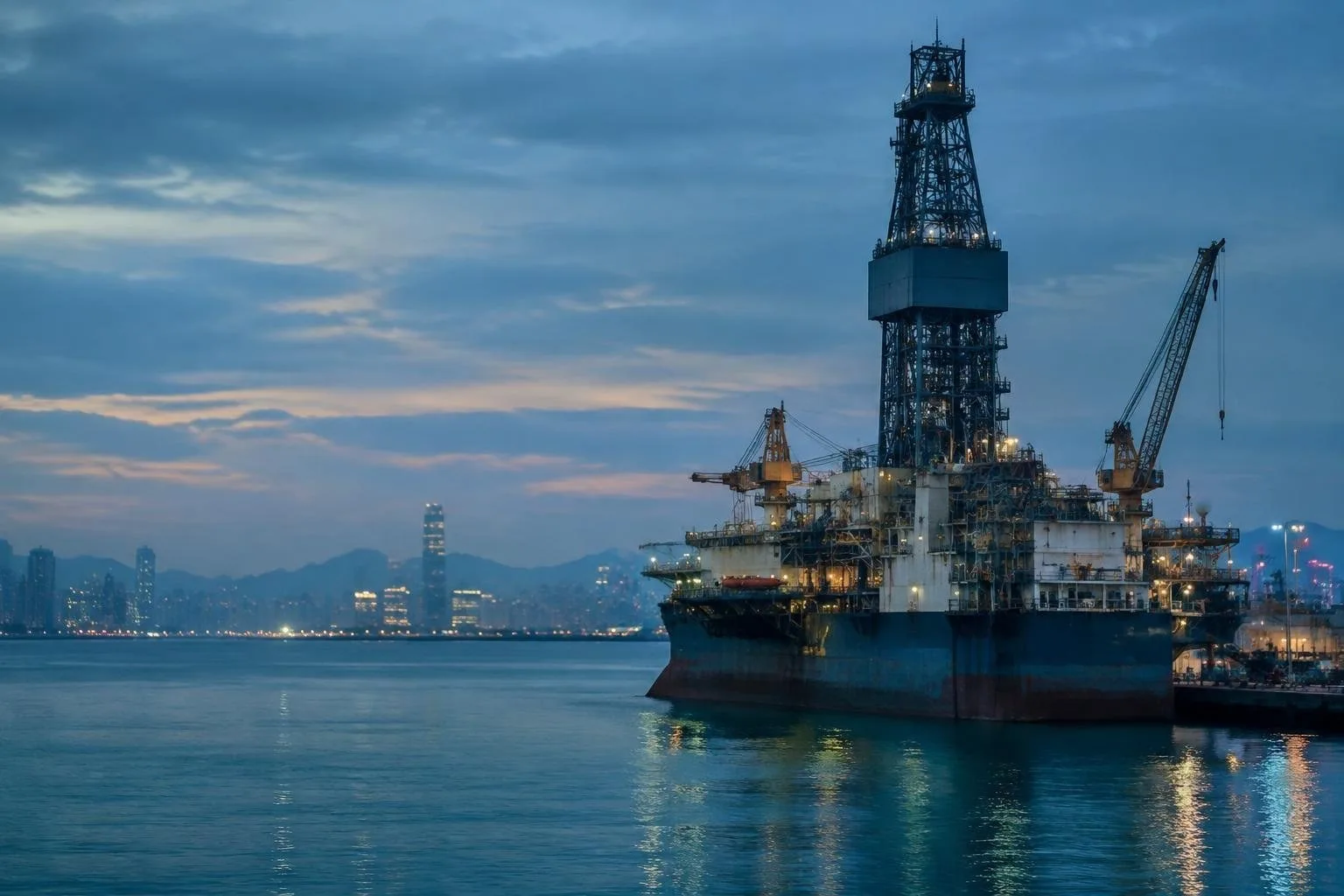
The drilling world is experiencing a rare confluence of large-scale mergers, expanding utilization and strategic acquisitions. Within weeks, two of the biggest offshore operators will combine forces, Canadian explorers are pushing more rigs into gold-rich terrain, and an Australian specialist is being absorbed into a global drilling group. Together, these moves illustrate a sector that is moving from a period of scarcity to one of renewed investment.
Transocean-Valaris merger creates the world’s biggest offshore fleet
The shareholders of Transocean (RIG) and Valaris (VAL) are slated to vote on 24 November. If the ballot clears, the merger will become effective on 1 December, forming a company that will own 68 high-end offshore rigs—an asset base that would cost roughly $48 billion to construct from scratch. By contrast, the combined entity’s market value, debt included, hovers around $17 billion, leaving a sizable valuation gap that investors find attractive.
The new fleet will be the largest collection of floaters—drillships and semisubmersibles—on the planet, commanding about $12.8 billion in signed contracts. At a current share price near $5.50 (down from a peak above $40 in 2014), the market is assigning a valuation well below the potential worth of the rigs if dayrates climb back to pre-2014 levels. In the most recent quarter, Transocean’s average dayrate was $462,600, and its rigs were employed 74.7% of the time. Small upward shifts in dayrates translate directly into profit because the bulk of operating costs—crew wages, maintenance and insurance—are incurred regardless of utilization.
Investor Mohnish Pabrai began buying Transocean shares in Q3 2025, eventually holding 24.4 million shares, which now represent 30.5% of his US portfolio. His confidence underscores a broader market belief that the scarcity of modern floaters will force dayrates toward the $650,000-$700,000 range needed to justify new-build projects. When that threshold is reached, the economics of commissioning a fresh drillship ($1 billion cost, three-year build time) become attractive again.
Gold-belt drilling activity climbs in Canada’s Abitibi region
North-America’s mining exploration boom is reflected in higher rig utilization across the Abitibi Greenstone Belt, a world-renowned corridor stretching from Timmins, Ontario to Val-d’Or, Québec. Orbit Garant Drilling reported a 70% utilization rate in its fiscal fourth quarter—the highest since 2012—while Foraco International lifted its third-quarter utilization to 53% from 35% a year earlier. Both firms cited strong demand for diamond drilling services tied to gold and copper projects.
One notable development is Opawica Explorations (OPW) initiating a competitive bidding process for a 10,000-metre NQ diamond-drill campaign at its Arrowhead Gold Project in Québec’s Rouyn-Noranda camp. The program aims to intersect previously identified high-grade zones and test new targets discovered through geophysical surveys. Arrowhead lies adjacent to Agnico Eagle’s LaRonde Complex, a historic producer of more than 8 million ounces of gold since 1988.
In parallel, AMEX Gold Mining disclosed a resource-conversion drill at its Perron Project, yielding a spectacular 114.07 g/t Au over one metre and hinting at a broader high-grade zone that could lift the project’s economics. IAMGOLD also reported extended mineralization at its Nelligan and Monster Lake targets, reinforcing the perception that the Abitibi Belt remains a hotbed for discovery. The combined effect of these projects is a measurable uptick in the demand for specialist diamond rigs, pushing utilization rates to multi-year highs.
Major Drilling adds specialised mine-dewatering expertise in Australia
Continuing the theme of strategic expansion, Major Drilling Group International (TSX: MDI) announced the acquisition of Bunbury Drilling Company (BDC) through its Australian subsidiary. The transaction comprises an upfront cash payment of A$50 million, with an additional A$20 million earn-out contingent on achieving EBITDA targets over three years, bringing total consideration to up to A$70 million (≈C$69 million).
BDC brings more than seven decades of experience in mine-site dewatering—a niche but critical service that keeps underground operations safe and productive. The company operates eight purpose-built high-end drills, generated A$43 million in revenue and A$15 million in adjusted EBITDA for the twelve months ending June 30 2026. Because dewatering requires specialized equipment and skilled crews, margins are typically higher than those of conventional underground drilling.
Major Drilling’s acquisition aligns with its broader plan to diversify beyond conventional oil-field work and deepen relationships with senior mining producers in Western Australia. The deal is expected to be immediately earnings-accretive and positioned to serve other markets where mine dewatering demand is emerging.
Collectively, the Transocean-Valaris merger, rising rig utilization in Canada’s gold belt, and the Australian dewatering acquisition illustrate a sector shifting from a decade-long contraction toward a new growth cycle. Investors and operators alike are watching dayrates, backlog volumes and strategic purchases as leading indicators of where drilling capital will flow next.