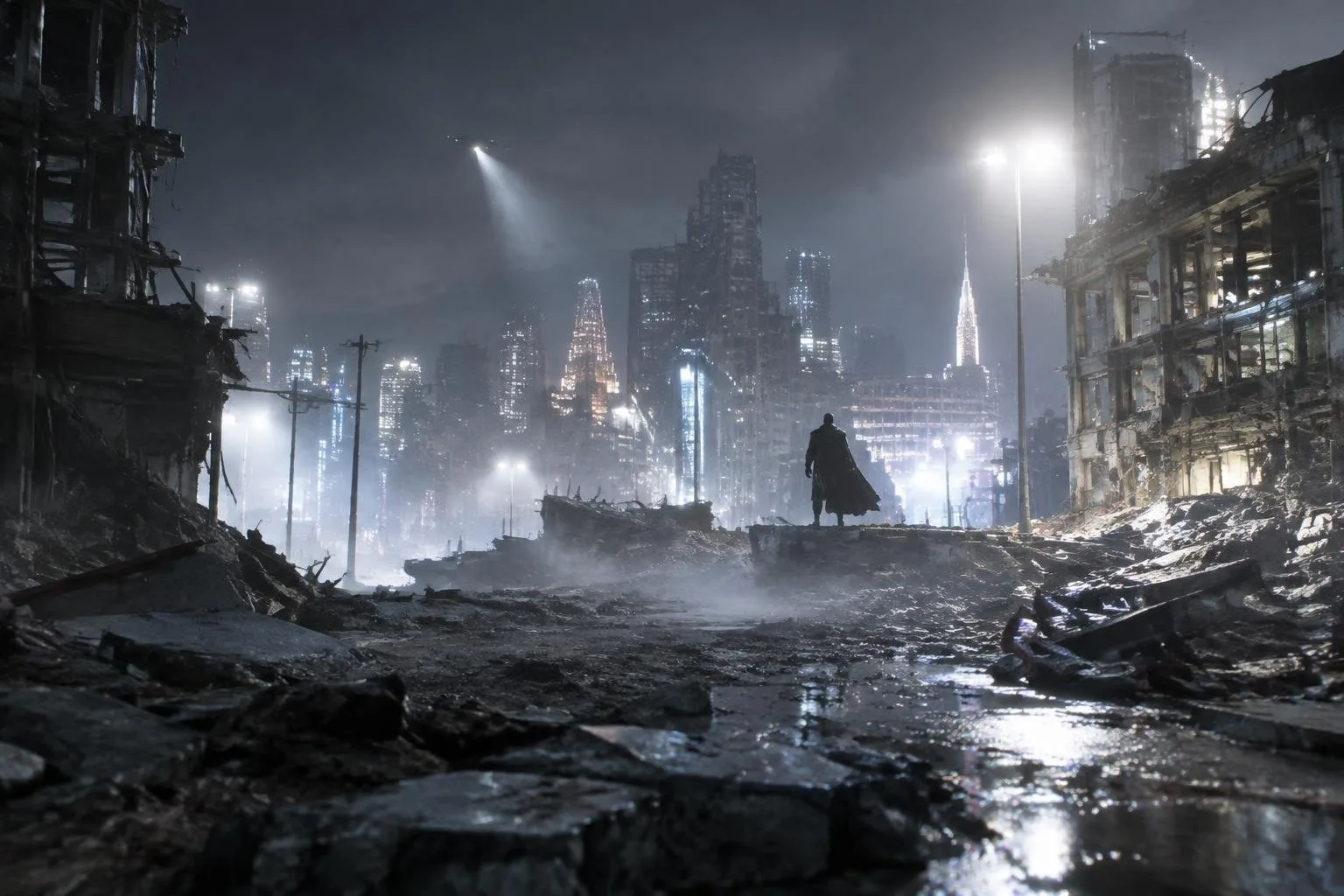
When the first three days of the Locust uprising unfold over the streets of Kona city, Gears of War: E-Day thrusts players into a desperate scramble for survival. The title abandons the expansive, open-world feel of its predecessor and instead opts for a tightly packed, night-time battlefield where every decision carries weight. Atmospheric lighting, the relentless sound of distant explosions, and the visual decay of collapsing buildings conspire to create a pressure cooker that feels more akin to a horror film than a conventional shooter. This shift is intentional: the developers wanted a visceral experience that mirrors the panic and chaos of the original Emergence Day narrative.
Reinvented play loops: extraction, Horde Siege and Warpath
The core loop now borrows heavily from the extraction shooter genre. Squads are given a primary objective in a sprawling urban map, but they may call in an extraction at any moment, trading potential upgrade rewards for safety. Secondary tasks appear spontaneously between waves, rewarding players with points that lower upgrade costs. The Horde Siege mode expands on the classic wave system by layering three intersecting missions within a single session, while a traditional 10-wave count satisfies longtime fans. Warpath, the Versus offering, pits teams against each other in rotating capture zones that force constant movement and close-quarters combat, keeping the franchise’s signature shotgun-centric play alive.
Technical foundation and storage optimisation
Built on Unreal Engine 5, the game leverages Nanite virtualized geometry and Lumen global illumination to render the crumbling architecture of Kona city with unprecedented fidelity. Yet the developers acknowledge that such visual fidelity can strain older hardware. To address this, a custom storage pipeline reduces RAM pressure by streaming high-resolution assets directly from SSD, allowing systems with limited memory to still enjoy smooth gameplay. The title also integrates RTX Mega Geometry for accurate ray-traced shadows, and a suite of upscaling and frame-generation tools keep frame rates steady in intense firefights.
Recommended specifications call for a modern SSD, a GPU supporting ray tracing, and at least 16 GB of system RAM to maintain a stable 60 FPS experience. Players on the lower end of the spectrum can lower volumetric fog and disable certain post-process effects without sacrificing core visual cues. The storage-first design ensures that even with these compromises the game retains its dense level detail and atmospheric lighting.
Community tools and optional difficulty adjustments
For users who find the resource grind in Horde Siege punishing, the community-maintained XMODhub suite offers a straightforward way to bypass upgrade caps. After installing the client, the program auto-detects the running game and provides toggles for infinite upgrade points, god-mode health, and instant ammunition. While the cheat engine is optional, it demonstrates the flexibility of the game’s underlying architecture, which separates core gameplay from resource management layers. Those who prefer a vanilla experience can ignore the tool, but its existence highlights the game’s openness to player-driven difficulty tuning.
Cross-play, enabled from launch, unifies the player base across consoles and PC, guaranteeing short matchmaking times and vibrant cooperative sessions. Whether teaming up for extraction runs or battling in Warpath, the shared pool ensures that squads are rarely left waiting for participants. This seamless integration, combined with the layered gameplay systems, positions Gears of War: E-Day as a notable evolution of the franchise, rewarding both horror enthusiasts and tactical shooters alike.