
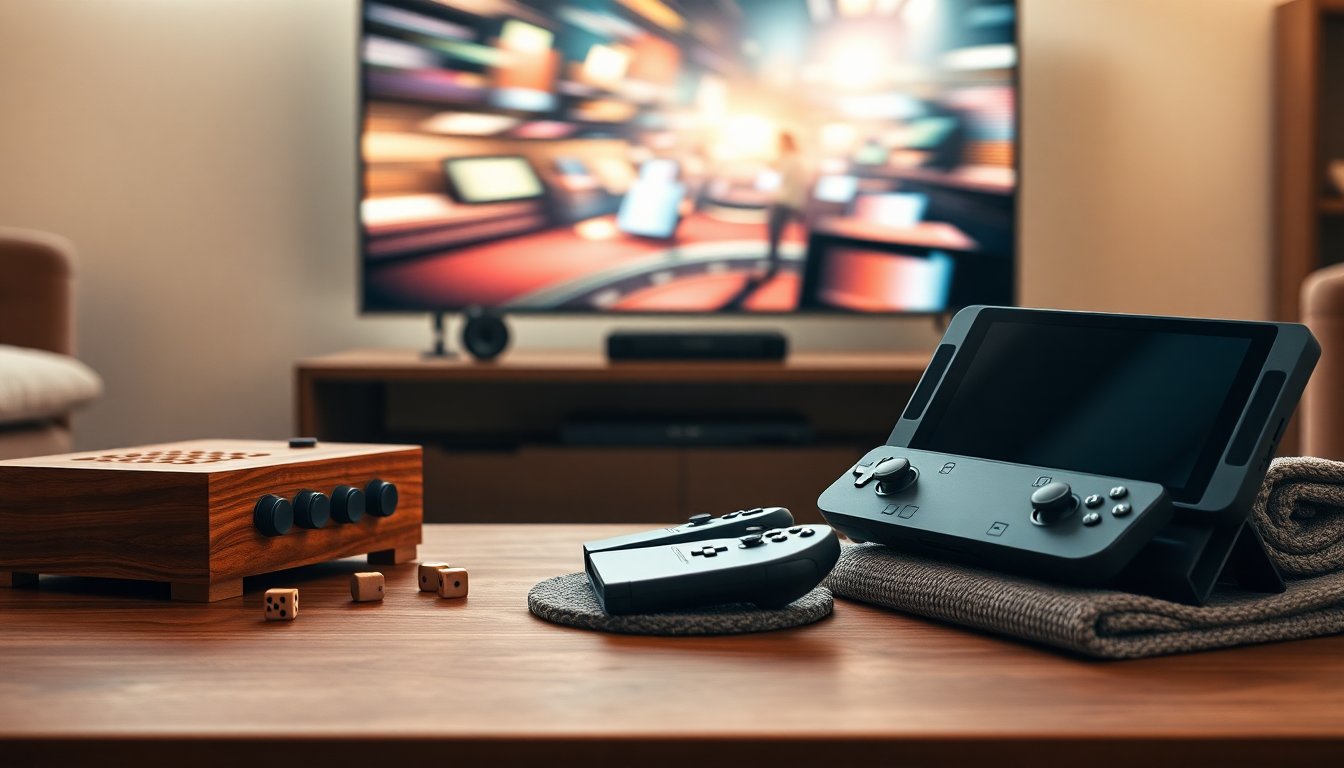
Families’ relationship with screens is shifting: U.S. children aged 0–8 now average about 2 hours 31 minutes of daily screen time, and reported gaming has surged roughly 65% since 2026. That context makes the choice of a household system more than a hobby purchase; it becomes a lifestyle decision about social interaction, physical activity, and recurring costs. This article compares three distinct approaches — a tabletop console, a TV-based motion system, and a hybrid handheld — to help you match hardware to your routines.
The three contenders take very different technical and business paths. Board is a self-contained tabletop console with a 24-inch touch surface and tactile pieces; Nex Playground is a compact motion-tracking camera that sits beneath a TV; and Nintendo switch OLED remains a versatile handheld/TV hybrid that defined the previous generation. Below, you’ll find hands-on comparisons of setup, content economics, social dynamics, and which household profiles suit each device.
Hardware, setup and household fit
Board is the largest physical commitment: the slab measures about 25.7 x 13.9 x 1.5 inches and works best on a stable coffee table near power. It supports multi-touch input for simultaneous moves, letting up to six people play together or more if you team up. The package includes physical game pieces that the capacitive screen recognizes instantly, which encourages face-to-face interaction. Durability is a selling point: premium materials, spill resistance, and a one-year warranty make it feel like a long-term fixture rather than a passing toy.
Nex Playground represents the opposite trade-off: a sub–1 lb camera box that connects via HDMI and tucks away when not in use. Setup takes minutes, but accurate tracking requires an open play area roughly 1.8 m by 2 m so the sensor can detect jumping and dodging. That footprint is ideal for apartments or rooms where people need to burn off energy. The plastic housing feels toy-like, but the optics inside deliver responsive full-body tracking when you’ve cleared space.
Games, pricing and long-term costs
Cost structures differ sharply. Board retails at $399 and includes seven built-in cooperative titles (Chop Chop, Space Rocks, Snek, Starfire, Astrofort, Board Arcade, and Cosmic Crush). Additional games are sold a la carte for $34.95 each and include the necessary physical pieces. No subscription is mandatory, which appeals to buyers who dislike ongoing fees. The library targets ages 6–12 and emphasizes couch-co-op experiences that are easy to drop into.
Nex Playground costs $249 and ships with five starter motion games. The platform expands via an annual Play Pass priced at $89, which unlocks a catalog of 45+ motion titles, including licensed preschool properties like Peppa Pig, Bluey, and Elmo. If your family plays frequently, the subscription model becomes economical; if usage is occasional, the yearly fee can feel like a ticking meter. Nex also sells optional foam accessories for sports-style games, a small ongoing expense to note.
Nintendo Switch OLED is the most flexible but often the priciest long term. The console’s MSRP is $349.99; a second set of Joy‑Cons for four-player sessions is $79.99, and many first-party or third-party games range from $40–$70. The Switch has the deepest catalog of couch co-op and single-player adventures, and games often retain resale value, but buying multiple titles annually can add up quickly. Expect added costs for online family subscriptions, replacement controllers, and larger storage via SD cards.
Social play, movement and family dynamics
Board prioritizes shared focus: because the screen faces upward and players manipulate physical tokens, sessions encourage conversation, collaborative problem-solving, and equitable participation. That design reduces fights about turns and lets younger children contribute through hands-on mechanics. The device works well for multi-generational gatherings where grandparents can participate without steep learning curves.
Motion and cardio with Nex
Nex Playground excels at getting people moving. Short, energetic titles—dance, dodgeball-style games, and rhythm routines—deliver bursts of activity comparable to earlier motion consoles. Those games are excellent for rainy-day energy release or family fitness moments. The camera’s cooperative modes also promote mimicry and teamwork rather than isolated high-score chasing.
Portability and depth with Switch
Nintendo Switch OLED sits between the other two: it offers motion-enabled party fare like Just Dance and Nintendo Switch Sports, but its blockbuster franchises (Mario Kart, Super Smash Bros., Zelda) are primarily controller-driven. The Switch shines for road trips, solo play sessions, and households with a mix of ages—teens and nostalgic parents will both find titles that resonate. However, it rarely recreates the face-to-face tactile experience that Board or the full-body energy of Nex provides.
Which system suits which household?
Match the device to your priorities: choose Board if you want an all-in-one, tactile centerpiece for family game night without subscriptions and if many players tend to gather in the same room. Pick Nex Playground if you need a compact, energetic solution to get kids moving indoors and don’t mind an annual subscription for a larger library. Opt for Nintendo Switch OLED when you want unmatched content depth, portability, and legacy franchises—even if long-term ownership costs are higher. Many families find value in mixing devices: a Board for group nights, a Switch for travel and single-player time, and Nex for active play sessions.
Ultimately, the right choice depends on your space, how often you play, and whether shared, physical interaction or deep software catalogs matter most. Consider setup constraints, recurring fees, and the kind of laughter, motion, or quiet concentration you want the console to encourage, then make a choice that complements your household rhythms.


